Хроника
Zheng He’s Voyages
Seven Voyages of the Ming Treasure Fleet
A mid-fifteenth-century fleet that carried Ming diplomacy across the Indian Ocean.
- Раздел
- Хроника
- Область
- Фуцзянь
- Эпоха
- yuan-ming-qing
- Теги
- History, Transport
Between 1405 and 1433, the Ming court sent seven large naval expeditions into the Indian Ocean. Commanded by the eunuch admiral Zheng He, the fleets visited ports from Southeast Asia to East Africa, exchanging gifts and asserting a maritime order.
A Commander from Yunnan
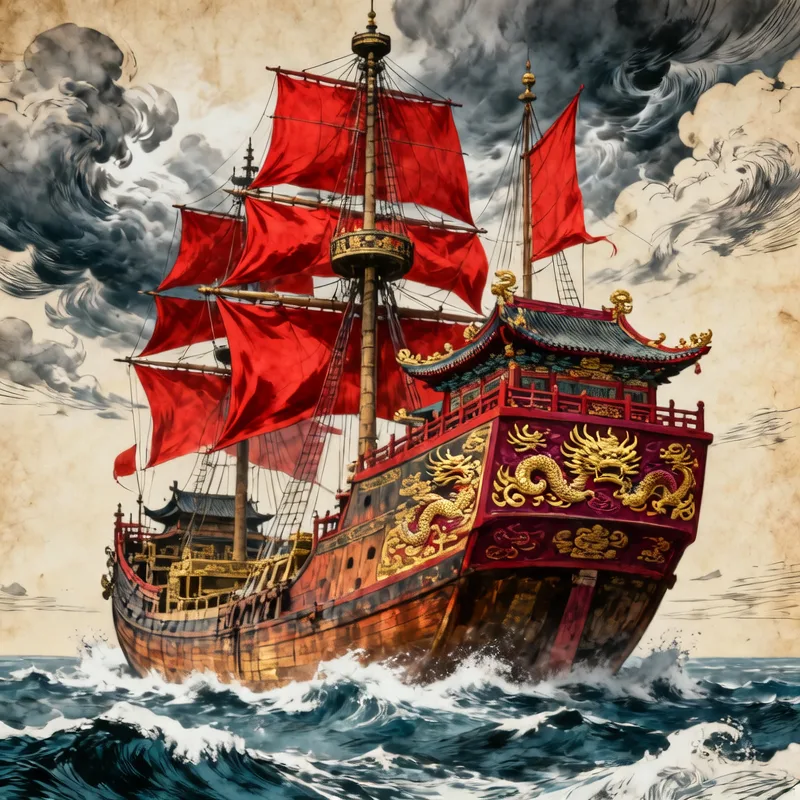
Zheng He was born Ma He around 1371 in Kunyang, Yunnan, into a Muslim family with connections to the Mongol administration. Captured as a boy during the Ming conquest of Yunnan, he entered the household of the prince of Yan, later the Yongle Emperor. He took the name Zheng He and rose to become a trusted eunuch official. In 1405, the Yongle Emperor ordered him to lead a fleet to the western oceans. The first voyage carried well over twenty thousand men, and the largest ships were far bigger than contemporary European vessels. Seven expeditions followed over twenty-eight years.
Building and Departing
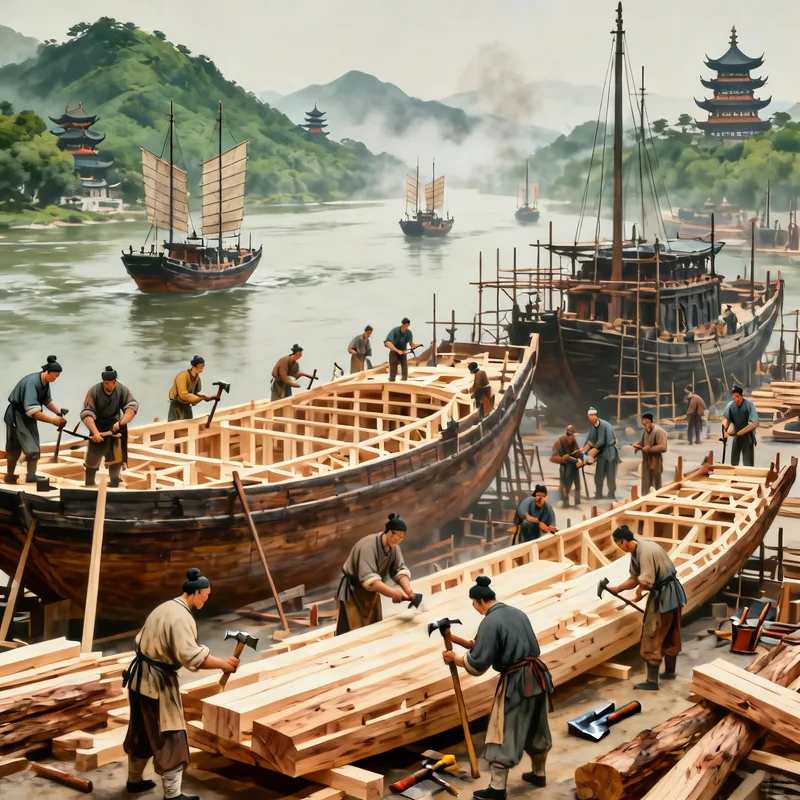
The fleets were built and provisioned through a vast state network. Shipyards at Nanjing and in Fujian constructed hulls whose dimensions are debated by historians, while carpenters, sailmakers, and caulkers worked under imperial requisition. Fujian supplied timber, skilled shipwrights, and pilots familiar with the southern seas. Expeditions assembled at Nanjing and at Liujiagang near Suzhou, where a 1431 stone inscription records donations and the distances sailed. From Fujian they rode the northeast monsoon south toward Champa and Java. The 1405 fleet reportedly included more than sixty treasure ships and hundreds of smaller vessels carrying horses, grain, and tribute goods.
Diplomacy Across the Ocean
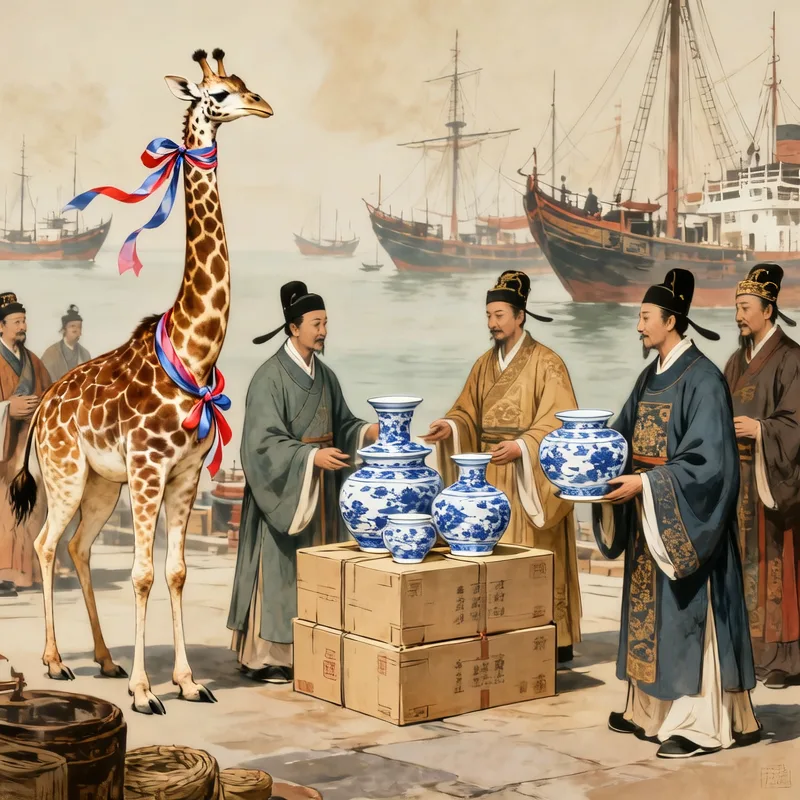
Zheng He sailed to Calicut on India’s Malabar Coast, to Hormuz and Aden, and to ports such as Mogadishu and Malindi on the East African coast. The fleets carried silk, porcelain, and gold, and returned with pepper, ivory, incense, gems, and exotic animals, including a giraffe presented as a tribute curiosity. Zheng He also fought pirates in Southeast Asia and installed rulers friendly to Ming interests. Unlike later European voyages, these expeditions did not establish colonies or a permanent overseas empire. They projected the tribute system, under which foreign rulers acknowledged Ming supremacy in exchange for gifts, titles, and protected trade.
- Calicut on the Malabar Coast
- Hormuz and Aden at the western end
- Malacca and Java in Southeast Asia
- Mogadishu and Malindi in East Africa
Why the Voyages Stopped
The expeditions ended after Zheng He died, probably in 1433 during the seventh voyage. His successor, the Hongxi Emperor, had already halted new fleets in 1424, and Confucian ministers argued that the cost drained the treasury while scholar-officials resented the eunuch admiral’s influence. The court shifted resources toward the northern frontier and the Grand Canal. Maritime trade continued through private merchants and the port of Quanzhou, but the state fleet disappeared, and many records were neglected. Centuries later, Chinese historians revisited the voyages as evidence of an earlier age of ocean-going capacity.
The treasure fleets carried an empire’s courtesy across the ocean, and then sailed no more.
Источники и дополнительная литература
- Zheng He — Энциклопедия Британника.
- Quanzhou: Emporium of the World in Song-Yuan China — UNESCO World Heritage Centre.
- The Seven Voyages of Zheng He — World History Encyclopedia.
Посмотрите, как это выглядит на месте.
Перейдите по этой ссылке в регион, к которому она относится.
Исследуйте с помощью карты