Leven & Folklore
The Chinese Zodiac
Twelve Animals, Sixty-Year Cycle
The twelve animals map years, hours and personality onto a repeating cycle.
- Sectie
- Leven & Folklore
- Regio
- Peking
- Tijdperk
- Door de eeuwen heen
- Tags
- Douane
The Chinese zodiac assigns an animal to each year in a twelve-year round. It is not a standalone horoscope but one layer of the lunisolar calendar, where twelve earthly branches combine with ten heavenly stems to name a full cycle of sixty years.
The Twelve Animals
The sequence is rat, ox, tiger, rabbit, dragon, snake, horse, goat, monkey, rooster, dog and pig, each paired with one of the twelve earthly branches: zi, chou, yin, mao, chen, si, wu, wei, shen, you, xu and hai. The goat is also translated as sheep or ram. A well-known folk tale explains the order as the result of a race across a river: the rat rides on the ox and leaps ahead at the bank, while the cat, in some versions, misses the crossing altogether. The story is later than the system it explains.
From Branches to Animal Signs
The branches themselves are old; the animals attached to them appear more gradually. The Metropolitan Museum of Art notes that the twelve were first associated with the lunar calendar in China around the third century BCE and were firmly established by the first century CE. By the Eastern Han dynasty (25–220 CE) the conventional order was fixed, and texts such as Wang Chong’s Lunheng list the same animals used today. The pairing spread across East and Southeast Asia, where local traditions altered the cast.
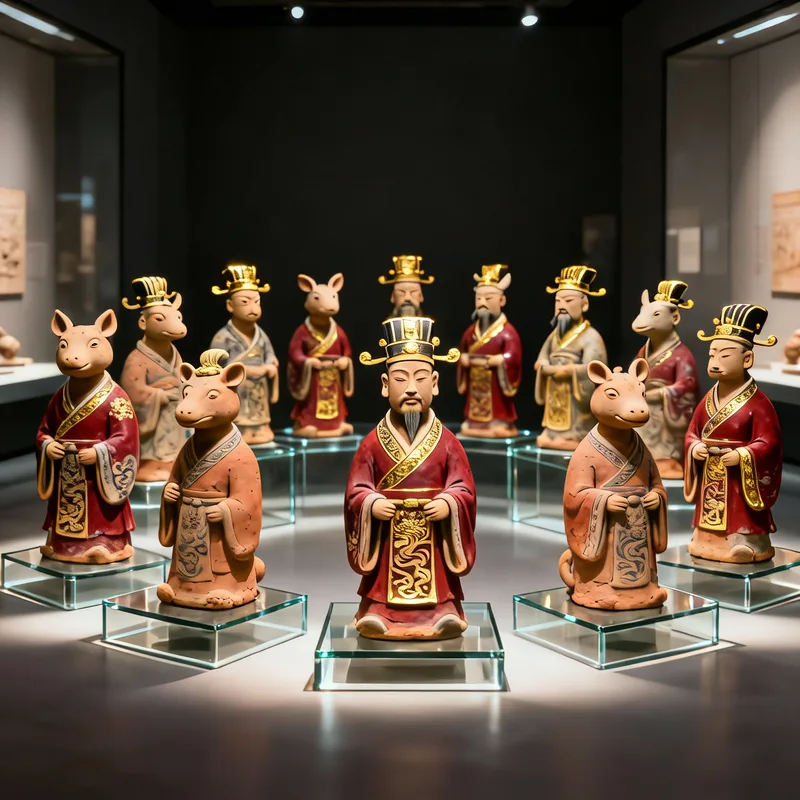
Tomb art confirms the dating. Tang dynasty (618–907) burials contain sets of twelve earthenware animals in official robes, placed as offerings for renewal and protection. Song dynasty examples are smaller glazed stoneware figures shown as civil officials or Daoist practitioners, with the identifying animal held in the hand or worn on the hat. The zodiac was never only a New Year novelty; it structured time in the tomb as it did among the living.
Stems, Branches and Destiny
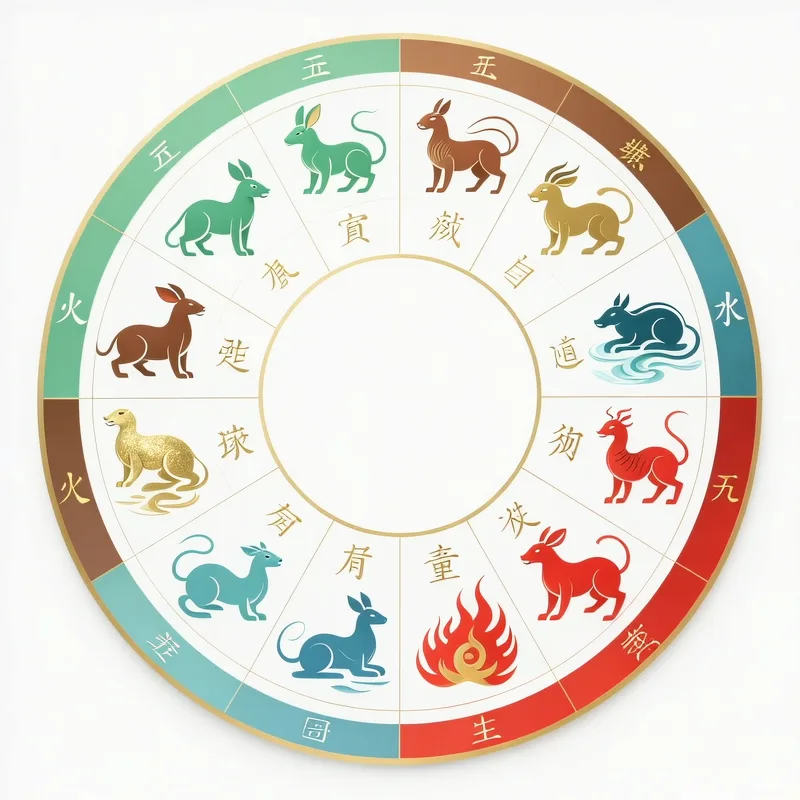
Because the ten stems and twelve branches advance together, a year is described by a pair such as bingwu, the Fire Horse of 2026; the same pair recurs only after sixty years. Branches also divide the day into twelve two-hour watches, the zi hour running from eleven at night to one in the morning. The four pillars of fate — year, month, day and hour — are built from four such pairs. Practitioners of bazi read them for temperament and fortune, and families once consulted them when arranging matches.
In Daily Life
Zodiac signs work as a shared shorthand rather than a strict belief. A person’s benming nian, the year their animal returns, is treated with caution; red clothing and red cords are common precautions, especially for children and elders. New Year prints, paper cuts and temple fairs display the animal of the year, and greetings routinely name it. Claims about compatibility draw on the branch cycle, with signs six places apart said to clash.
- 2026 is Bingwu, the Year of the Fire Horse.
- Each branch governs a two-hour period; zi covers 11 p.m.–1 a.m.
- The four pillars of destiny combine year, month, day and hour.
- Vietnam substitutes a cat for the rabbit.
Regional Variations
The cycle travelled with Chinese settlement and trade. In Vietnam the rabbit becomes a cat and the ox a water buffalo; the goat may be called a sheep elsewhere. Zodiac animals appear on coins, mirrors, lacquer and ceramics across the region, and Korean and Japanese calendars adopted the same branches with their own animal lists. Such variations matter: they show a calendar system being translated, not simply copied. The Chinese sequence remains the reference point for the lunar New Year celebrated in Beijing and in diaspora communities worldwide.

The rat wins the race because it knows when to jump — a story invented long after the cycle was already in use.
Bronnen en verdere informatie
- Chinese zodiac — Encyclopaedia Britannica.
- Set of twelve zodiac animals, Tang dynasty — The Metropolitan Museum of Art.
- Celebrating the Year of the Dog — The Metropolitan Museum of Art.