Kroniek
De Qin-eenwording
One Empire, One Script, One Standard
The conquests and reforms that created China’s first centralised empire.
- Sectie
- Kroniek
- Regio
- Shaanxi
- Tijdperk
- qin-han
- Tags
- History
In 221 BCE, the king of Qin took the title First Emperor and ended centuries of interstate rivalry. The dynasty he founded lasted only fifteen years, yet its administrative methods shaped every later Chinese state.
The Warring States Background
The Qin state grew powerful in the Wei River valley, in modern Shaanxi, because of reforms carried out by the minister Shang Yang from 356 BCE. He reorganised landholding, rewarded agricultural output and military merit, registered households for taxation and conscription, and imposed a strict legal code. These measures gave Qin a disciplined army and a reliable grain supply. Its rivals, including Chu, Zhao, Wei, Han, Yan, and Qi, held out with varying success through the fourth and third centuries BCE. The walled capital Xianyang became the base from which Qin kings directed a long series of campaigns.
The Campaigns of 230–221 BCE
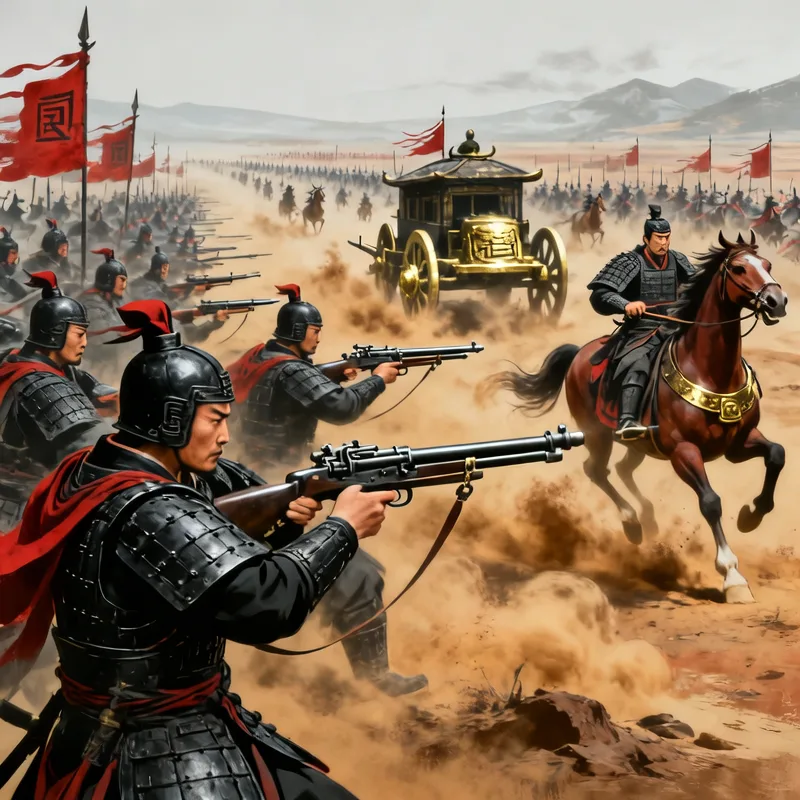
Between 230 and 221 BCE, Qin armies conquered the six remaining states in sequence: Han, Zhao, Wei, Chu, Yan, and Qi. The king, Ying Zheng, had come to the throne in 246 BCE and, after victory, adopted the title Qin Shi Huang, First Emperor of Qin. His chancellor Li Si argued against restoring feudal fiefs for the royal family and generals, warning that they would become independent rivals. The emperor accepted the argument and divided the empire into commanderies governed by appointed officials. A famous debate at court in 221 BCE thus settled the shape of imperial rule for centuries.
Standards as an Instrument of Rule
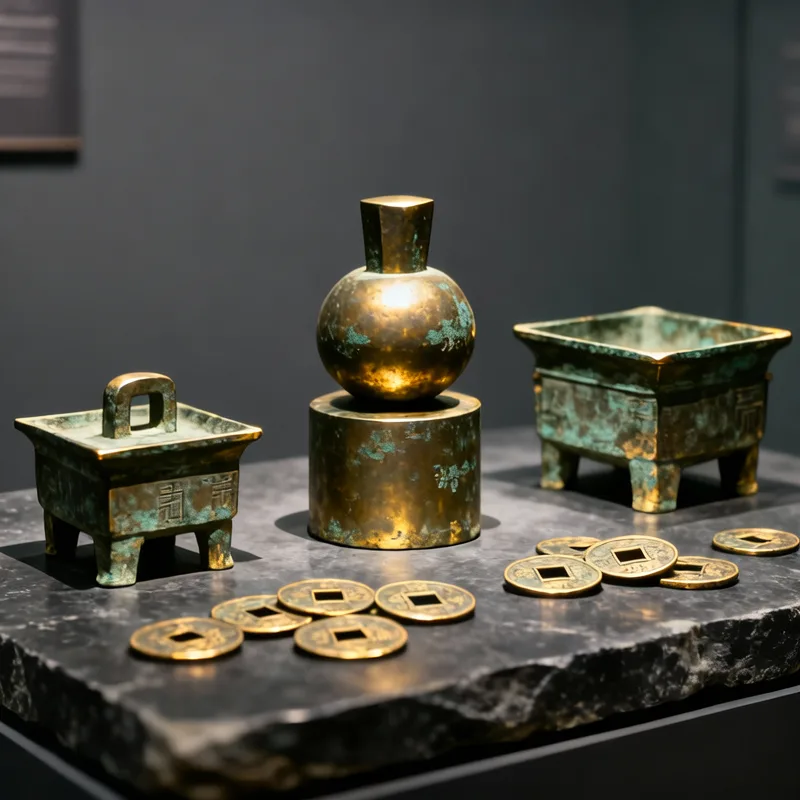
Unification required practical uniformity. The Qin court standardised weights and measures, the round copper banliang coin, and the small seal script, a simplified writing system that officials could use across regions with different spoken languages. Carts were built to a common axle width so that ruts on imperial roads would match, and a network of highways and canals linked the capital to the provinces. Decrees were carved on stone and distributed. These policies lowered the costs of taxation, transport, and legal administration. They also made central authority visible in daily transactions, from market weights to the shape of a written character.
The Cost of Uniformity
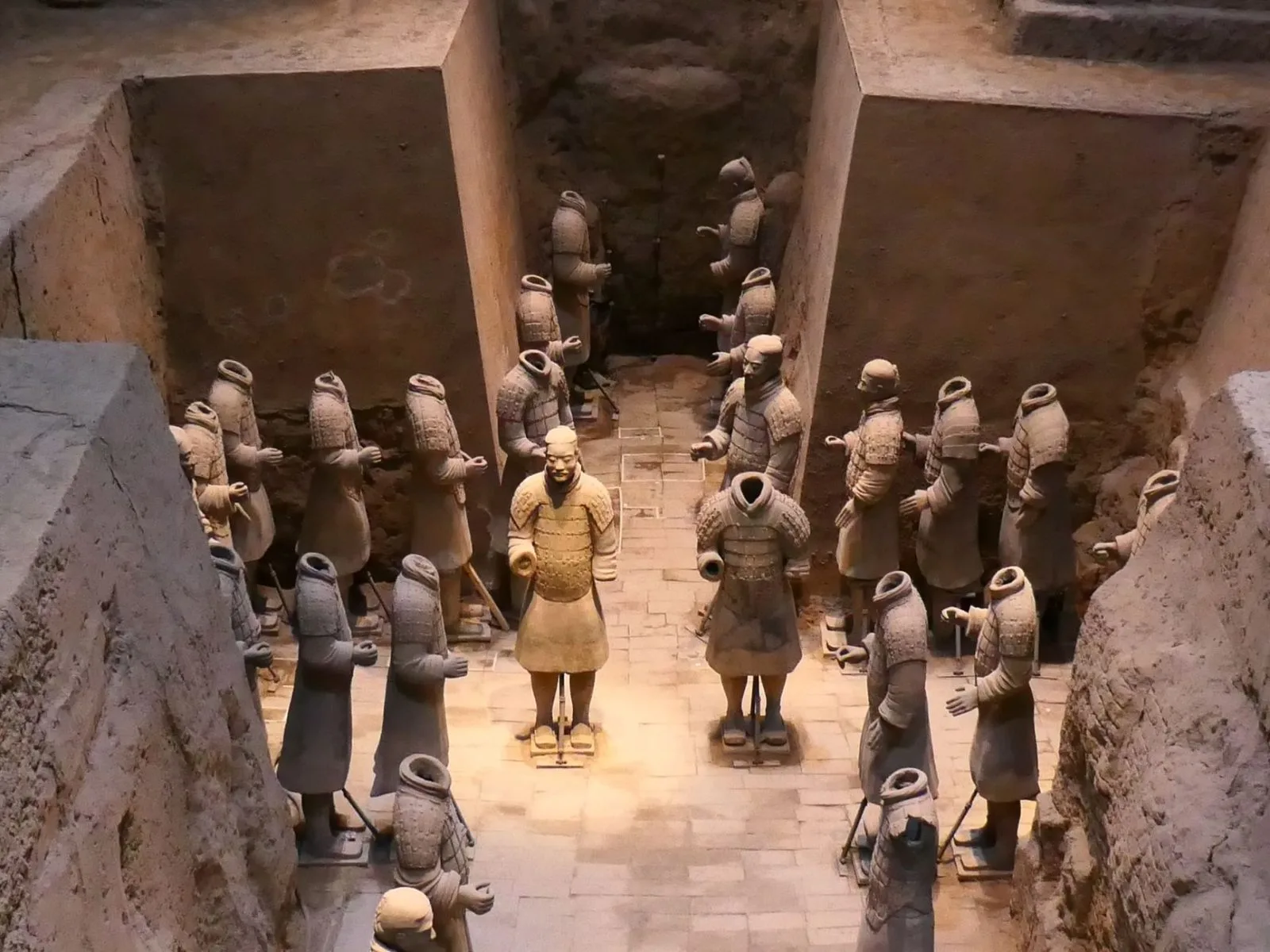
The same government that standardised script also demanded heavy labour and enforced ideological conformity. Hundreds of thousands of convicts and conscripts worked on the emperor’s mausoleum near Mount Li, the frontier walls, and the Epang Palace. In 213 BCE, Li Si urged the burning of historical records and privately held books outside approved technical works; the following year, hundreds of scholars were reportedly executed at Xianyang. When the emperor died in 210 BCE, the succession was contested and revolts began in 209 BCE under Chen Sheng and Wu Guang. The dynasty fell in 206 BCE, but the Qin framework survived.
The Qin won the empire with armies and kept it with writing, weights, and roads.
Bronnen en verdere informatie
- Qin dynasty — Encyclopaedia Britannica.
- Mausoleum of the First Qin Emperor — UNESCO World Heritage Centre.
- Qin Dynasty — World History Encyclopedia.