삶과 민속
Chinese Weddings
Rites, Gifts and the Red Veil
Traditional Chinese weddings join two families through a sequence of gifts, processions and vows.
- 부분
- 삶과 민속
- 지역
- 저장성
- 연대
- 시대를 넘어서
- 태그
- 세관
A Chinese wedding was historically less a single ceremony than a negotiated sequence between households. The classical six rites set out steps from proposal to the fetching of the bride; local practice in Zhejiang added its own music, boats and wines.
The Six Rites
The classical sequence, codified in ritual texts of the Zhou dynasty, is known as the six rites. A go-between first presented a proposal (nacai), then asked the bride’s name and birth details (wenming). Divination at the ancestral altar produced a favourable answer (naji), after which the groom’s family sent betrothal gifts (nazheng), requested an auspicious date (qingqi) and finally fetched the bride (qinying). Three documents — the betrothal, gift and wedding letters — accompanied the exchange. Few families performed all six in full, but the vocabulary survived in engagements.
The Day of the Procession
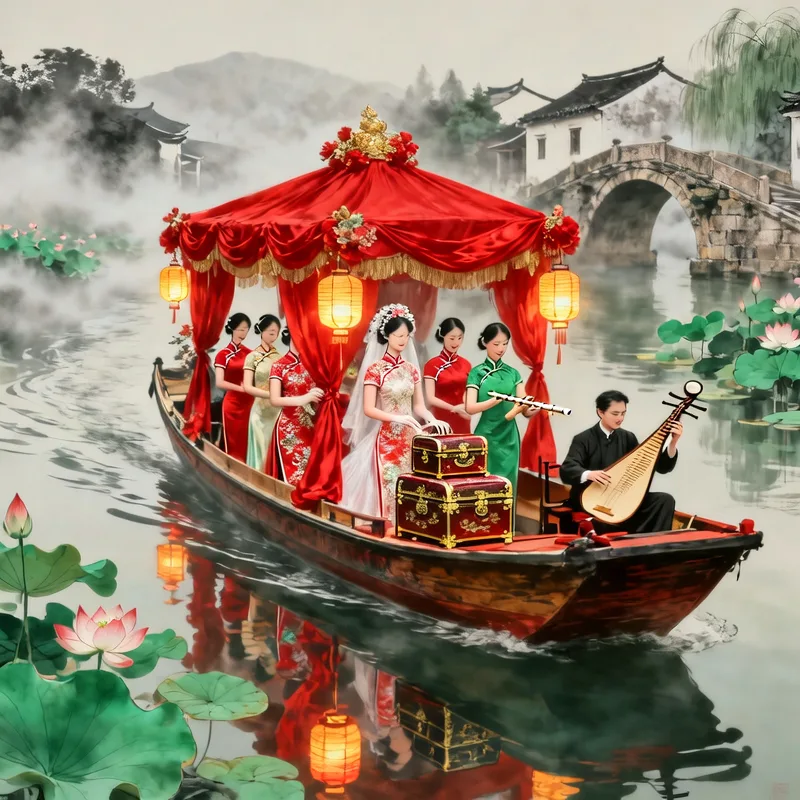
The word for marriage, hunyin, shares its first character with dusk, the traditional hour of the ceremony. Before dawn the bride, veiled in red, was carried from her natal home in a decorated sedan or, in the water towns of northern Zhejiang, aboard a boat hung with lanterns. Firecrackers and the reeds of suona horns announced the party. Crossing a saddle and a burning brazier at the groom’s gate invoked safety through puns on peace; the bride stepped over a threshold that marked a change of household.
Inside, the couple bowed to the wedding candles, to the groom’s ancestors and to the elders, then served tea to both families in order of seniority. Red envelopes of money acknowledged each bow. On the bridal bed, dates, peanuts, longans and lotus seeds were scattered for a pun on bearing a son soon. A woman of good fortune straightened the quilts and spoke auspicious words. Only after the banquet, with its toasts of ganbei, did the formal duties ease.
Zhejiang Inflections
Regional custom gave the framework local texture. In Shaoxing, a jar of yellow rice wine might be buried when a daughter was born and opened at her wedding: nuer hong, daughter’s red. The wine belonged to the bride’s family and travelled with the dowry, alongside silk quilts from Huzhou and lacquered furniture. In Wuzhen and other canal towns, the bridal procession moved by water, and Yue opera troupes were hired for the feast. Southern Zhejiang kept the custom of laments, in which the bride and her women sang farewell verses.
Gifts, Dowries and Alliances
Betrothal gifts and dowries were not mere display; they recorded the standing of two families and the terms of an alliance. The groom’s side supplied money, tea, wine, silk and livestock, while the bride brought textiles, jewellery, furniture and sometimes land or a shop. Surname exogamy was the rule: marriage within the same patrilineal clan was treated as incest. The 1950 Marriage Law recast the legal framework, establishing free choice of partner and equal property rights for spouses, but many gift customs continued.
- Six rites: nacai, wenming, naji, nazheng, qingqi, qinying
- Shaoxing’s nuer hong wine is opened at the daughter’s wedding.
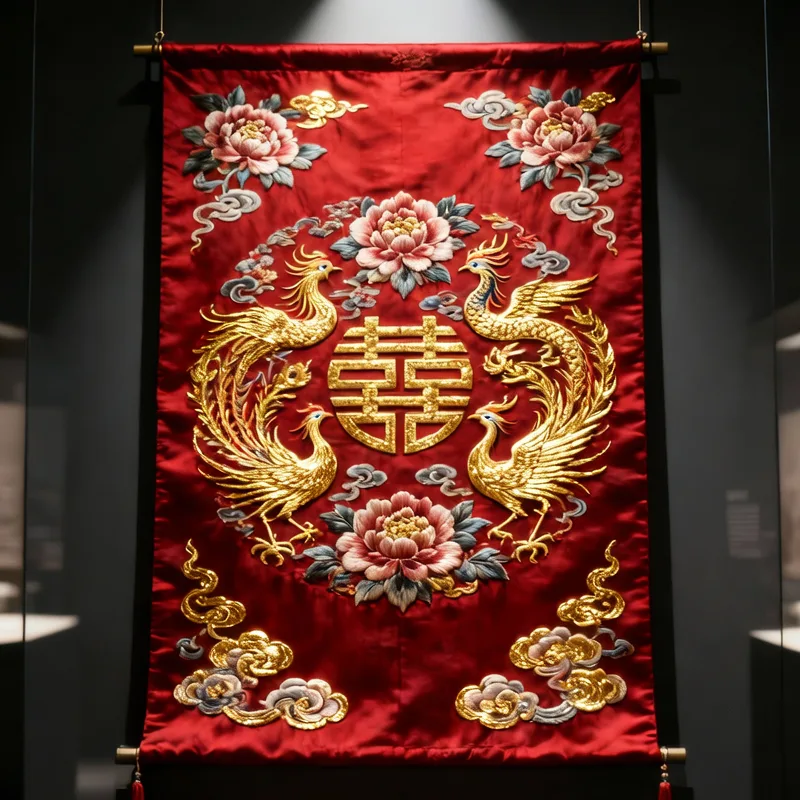
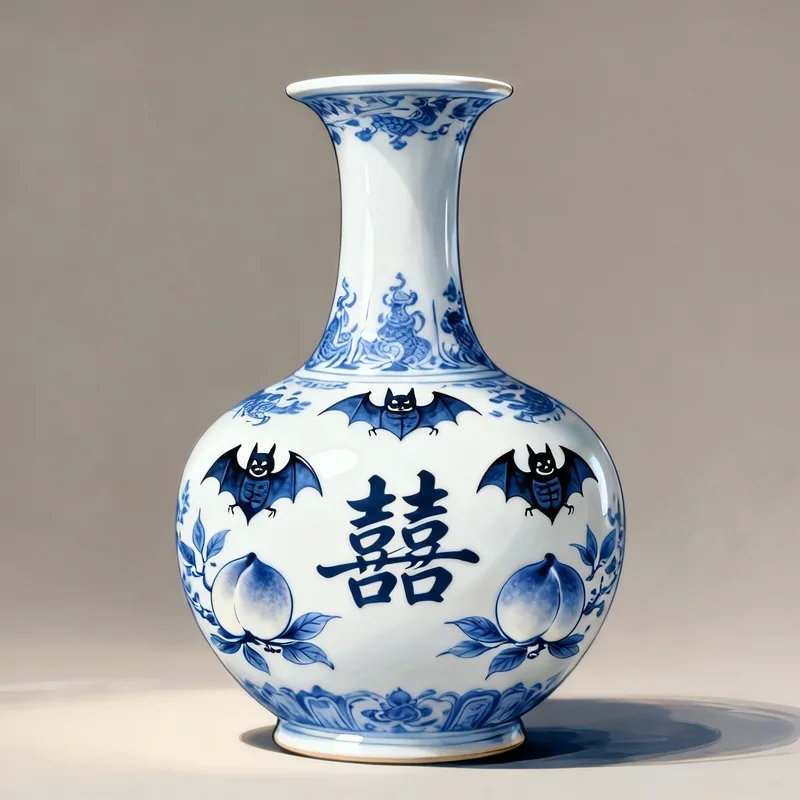
- Double happiness (shuangxi) appears on linens, paper cuts and pottery.
- Tea served to elders wins red envelopes in return.
Weddings Now
Today a civil registration at the local civil affairs office makes a marriage legal, and ceremonies are chosen from a menu of options. Some couples hold a restrained tea ceremony at home; others book a banquet hall, a photographer and a host who keeps the toasts moving. The red veil has given way to a white dress for many brides, often followed by a red qipao for the formal photographs. In Zhejiang’s water towns, staged wedding processions are also a tourist performance, repeating the same gestures for an audience of visitors.
The bride’s tears, the groom’s brazier and the jar of wine buried at her birth all belong to one grammar of departure and arrival.
참고 자료 및 추가 정보
- Marriage rituals — 브리태니커 백과사전.
- Why did traditional Chinese society prohibit marriage between people with the same surname? — 브리태니커 백과사전.
- Vase decorated with bats and peaches amid scrolling floral vines and double happiness character — The Metropolitan Museum of Art.