地図探索
Jiuzhaigou
Nine villages, a hundred lakes
Walk the Tibetan valleys where travertine lakes and waterfalls descend through conifer forest.
- セクション
- 地図探索
- 地域
- 四川省
- 時代
- 時代を超えて
- タグ
- Scenic Sites, Geography
Jiuzhaigou lies in northern Sichuan’s Aba Tibetan and Qiang Autonomous Prefecture. Its name means ’Nine Village Valley’, and UNESCO inscribed the area in 1992 for its alpine lakes, waterfalls and karst forms.
Three valleys, many lakes
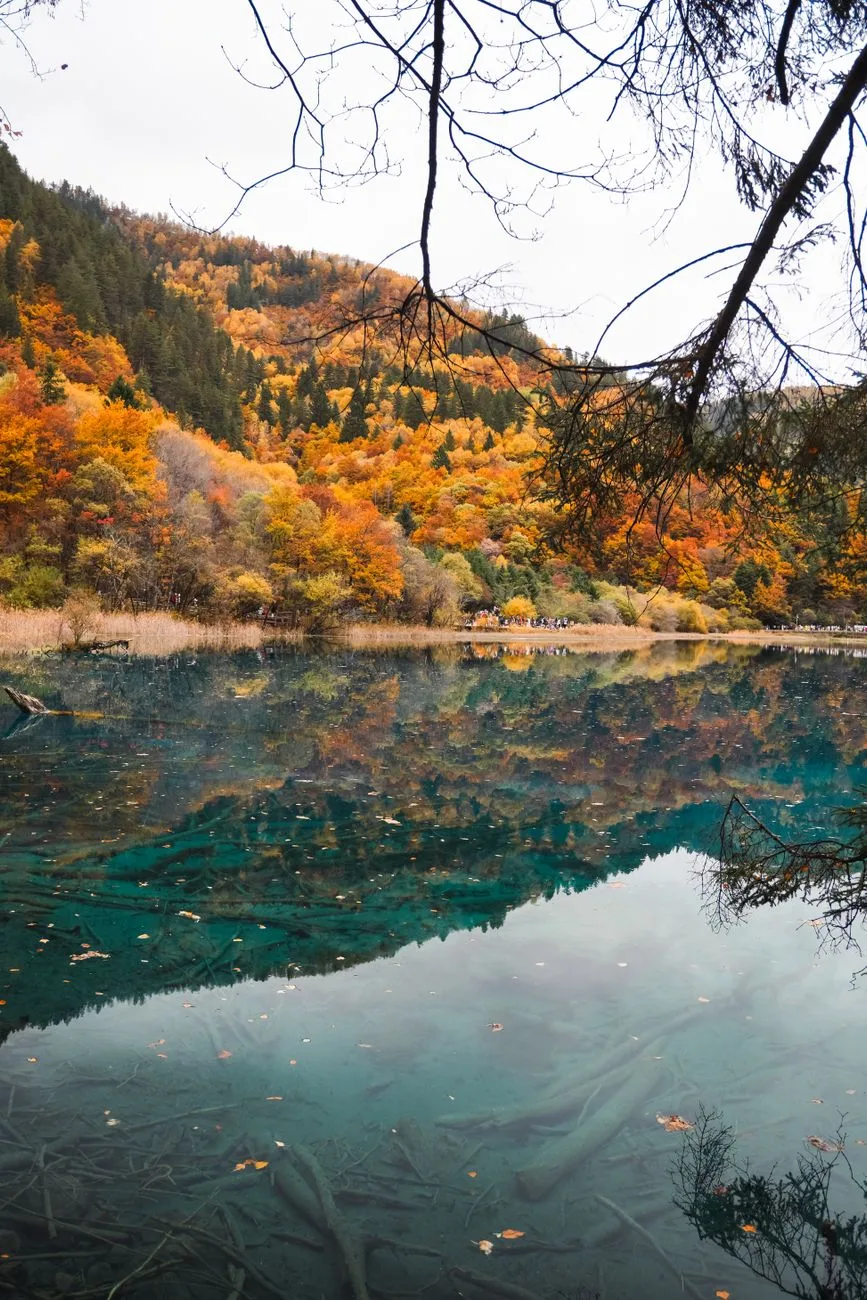
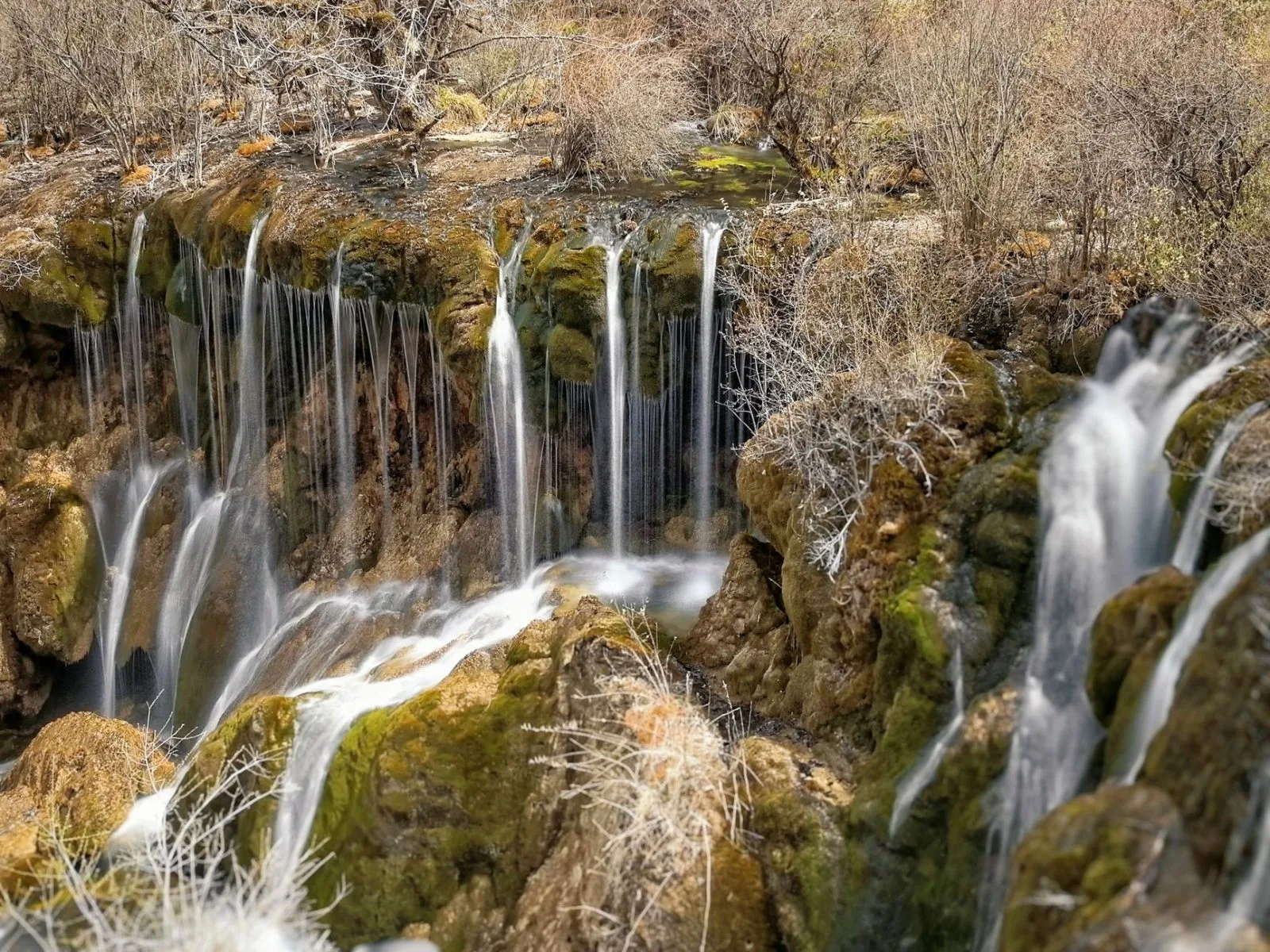
The protected area covers about 72,000 hectares and rises from roughly 2,000 metres at the entrance to more than 4,700 metres on its highest ridges. Three stream valleys — Rize, Zechawa and Shuzheng — meet near the centre before flowing north. Their floors hold more than a hundred lakes, including Long Lake and Five Flower Lake, plus travertine terraces and falls. Calcium carbonate dissolved from limestone precipitates in the cool water, lining lake beds and building low dams. The result is the clear blue-green colour that gives the valley its reputation, best seen when the forest is still.
Village life and the 2017 earthquake
Tibetan villages give the park its name; nine settlements once stood along the valleys, and several remain within or beside the protected area. Residents have shifted from farming and forestry towards guiding, hospitality and craft work as tourism has expanded. On 8 August 2017 a magnitude 7.0 earthquake damaged trails, lakes and waterfalls, including Nuorilang Falls. Parts of the park reopened in 2018, access widened in 2019, and full reopening came in 2021 after reconstruction and natural recovery. Visitors should check current route and daily-capacity rules before travelling, since conditions still change.
Seasons and colour
Autumn, from late September into October, is the busiest period: larches and maples turn gold and red against evergreen conifers, and the lakes reflect the slope colours. Spring brings fresh growth and higher flows; summer is green, wet and crowded, with afternoon showers common at this elevation. Winter is quiet and cold, with snow on the trails and ice around the falls. The national holiday week from 1 October draws particularly large crowds, and entry is managed through timed tickets and shuttle buses. Early morning light is usually clearest for photography.
Practical routes
Jiuzhaigou is roughly 400 kilometres north of Chengdu by road, a journey of eight to ten hours by bus or private car over mountain passes. Travellers can also fly to Jiuzhaigou Huanglong Airport, at about 3,400 metres, then continue by road for around two hours. Inside the park, a shuttle-bus network links the main valleys, and boarding points are busy at the morning peak. Huanglong, another World Heritage site to the south, protects travertine terraces at elevations above 3,000 metres. Combine the two only with time to acclimatise, since both sit high.
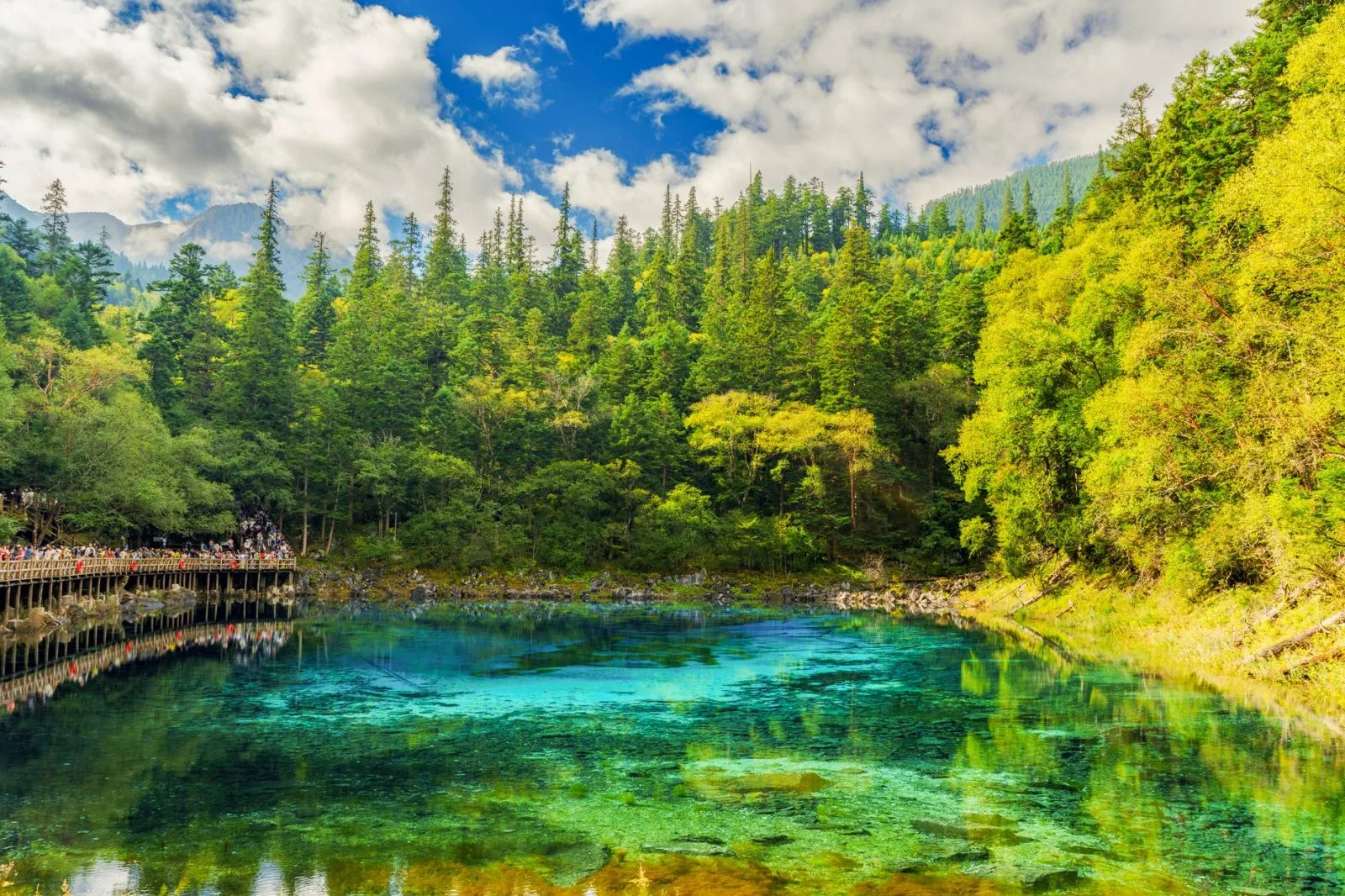
The colour of the lakes is geology made visible: limestone dissolved upstream, redeposited here.
出典と参考文献
- Jiuzhaigou Valley Scenic and Historic Interest Area — ユネスコ世界遺産センター
- Jiuzhaigou fully reopens to visitors after earthquake — China Daily.
- Huanglong Scenic and Historic Interest Area — ユネスコ世界遺産センター