Kehidupan & Cerita Rakyat
Cantonese Cuisine
Steam, Wok Heat, and Coastal Markets
Guangdong cooking turns local seafood and temple fair foods into a refined restaurant tradition.
- Bagian
- Kehidupan & Cerita Rakyat
- Wilayah
- Guangdong
- Era
- Sepanjang zaman
- Tag
- Food, Geography
Cantonese cuisine is the cooking of Guangdong and its diaspora, built on river deltas, coastal markets, and the heat of the wok. Its best-known dishes—roast goose, dim sum, and steamed fish—sit beside home-style soups and street snacks.
The Pearl River Pantry
The Pearl River Delta gave Cantonese cooking an unusually broad pantry. Rice grows in the lowlands, fish and shellfish come from the estuary, and hills behind Guangzhou supply vegetables, pork, and poultry. Guangzhou was a major port under the Tang and again after European traders arrived in the seventeenth and eighteenth centuries. Merchants, officials, and temple fairs supported restaurants that could pay for skilled chefs. By the Qing period, Guangzhou’s tea houses served small plates known as dim sum through the morning and midday. Emigrants from Guangdong later carried these dishes to Southeast Asia, North America, and Europe, adapting them to local supplies.
Wok Hei and the Roast House
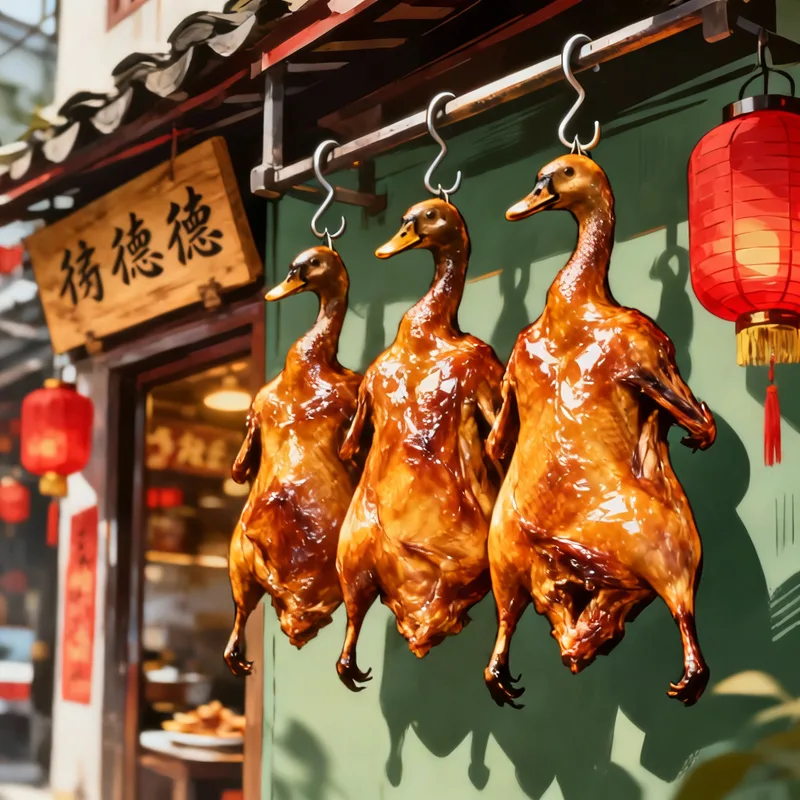
Cantonese stir-frying depends on wok hei, the barely definable aroma produced when hot oil, vapours, and food meet a very hot wok. Chefs toss ingredients to keep them moving and prevent scorching; sauces are added late, often with cornstarch to give a light coating. Roasting is another speciality. Guangzhou-style white-cut chicken is poached and served with ginger and spring onion, while roast goose from Shunde is glazed, air-dried, and hung in a brick oven until the skin blisters. Char siu pork is marinated with honey and red fermented bean curd, then roasted with sugar caramelising at the edges.
Dim Sum and Morning Ritual
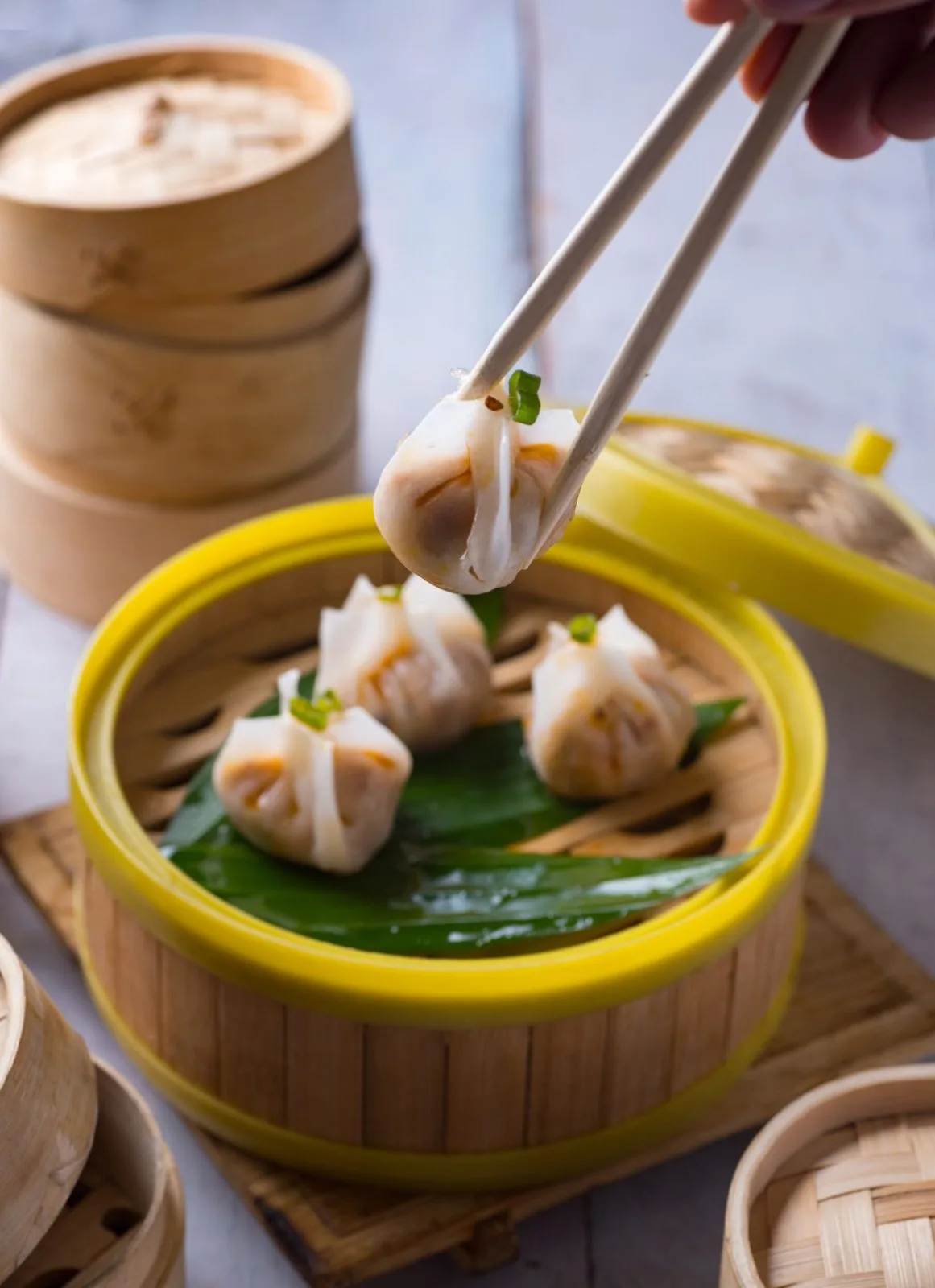
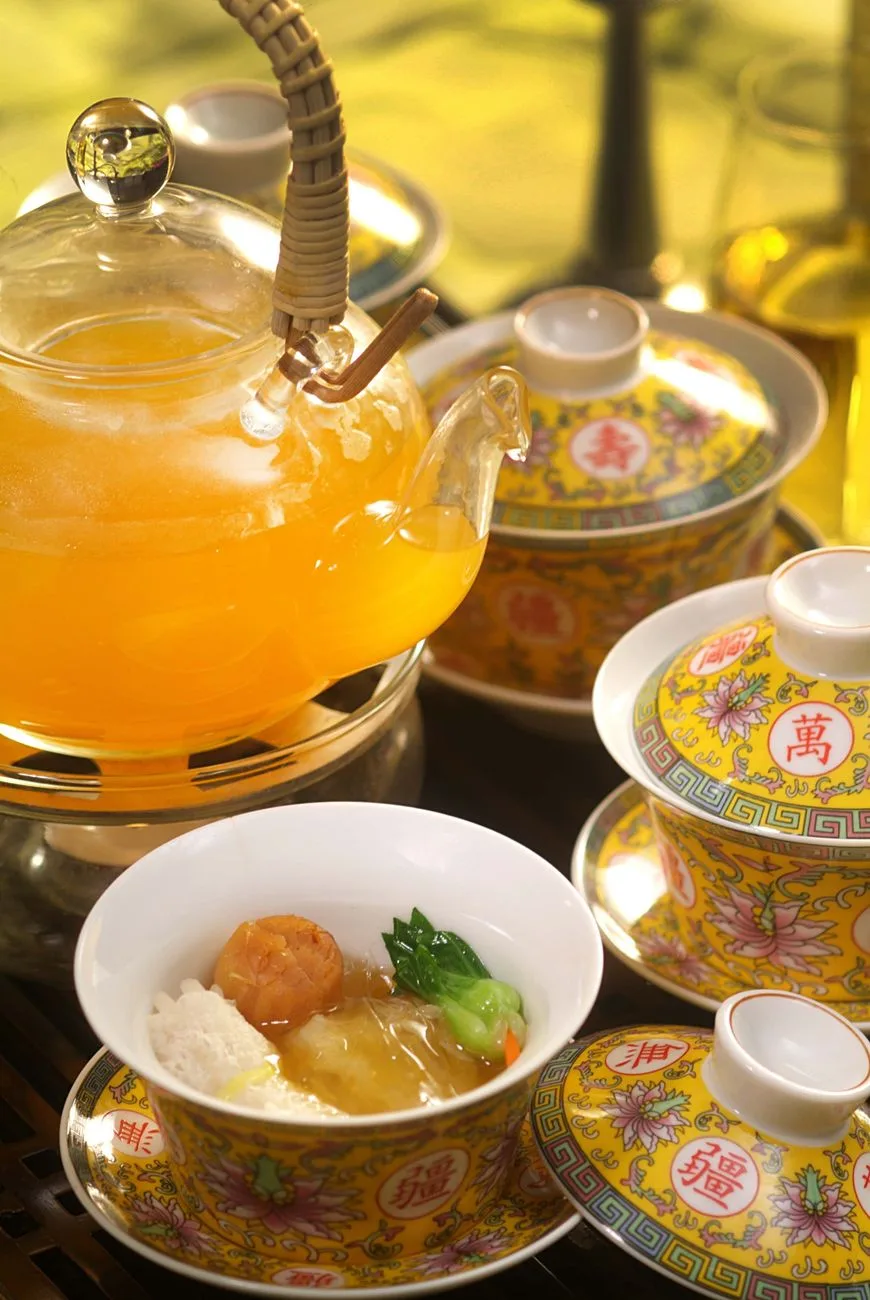
Dim sum means a light snack, but in Cantonese practice it describes a meal of small portions ordered from trolleys or a paper card. Har gow wrap shrimp in a translucent wheat-starch skin; siu mai open-topped dumplings hold pork and shrimp; char siu bao are soft steamed buns with sweet roast-pork filling. Cheung fun are broad rice-noodle sheets rolled around shrimp, pork, or beef and dressed in soy sauce. Tea accompanies the meal, and the old custom of tapping a pot’s lid to signal for a refill is still performed, though younger diners may simply ask. The ritual is social as much as culinary, filling teahouses from early morning.
- Har gow with translucent shrimp filling
- Siu mai topped with a single shrimp
- Cheung fun rice rolls with soy dressing
- Egg tarts adapted from British custard pastry
Regional Range and Diaspora
Cantonese food is not one style. Shunde is known for delicate dairy desserts and fish dishes, Chaozhou nearby has a separate tradition of braised goose, seafood, and strong oolong tea, and Hakka communities in the hills favour preserved vegetables and stuffed tofu. Teochew and Hainanese migrants carried their own versions abroad. In Chinatowns from San Francisco to Singapore, Cantonese restaurants adapted to local tastes while keeping techniques such as steaming, roasting, and long simmered double-boiled soups. The resulting cuisines are mixed, but they preserve a central idea: fresh ingredients, precise heat, and a sauce that supports rather than hides them.
Cantonese cooking asks a wok to do in seconds what other traditions give hours of stewing.
Sumber & bacaan lebih lanjut
- Chinese Cuisine — Ensiklopedia Britannica.
- Cantonese cuisine — Ensiklopedia Britannica.
- Guangzhou — UNESCO World Heritage Centre.