यात्रा मार्गदर्शिका
स्टेशन सुरक्षा
What happens before the platform
A Beijing railway station is a screened environment; build extra time into every journey.
- अनुभाग
- यात्रा मार्गदर्शिका
- क्षेत्र
- बीजिंग
- युग
- आधुनिक चीन
- टैग
- परिवहन
Before you reach a platform in Beijing, your luggage, your identity, and usually your body pass through separate checks. The process is routine at a quiet hour, but queues at a major station can swallow half an hour or more. Knowing the sequence makes it far less stressful.
At the Entrance
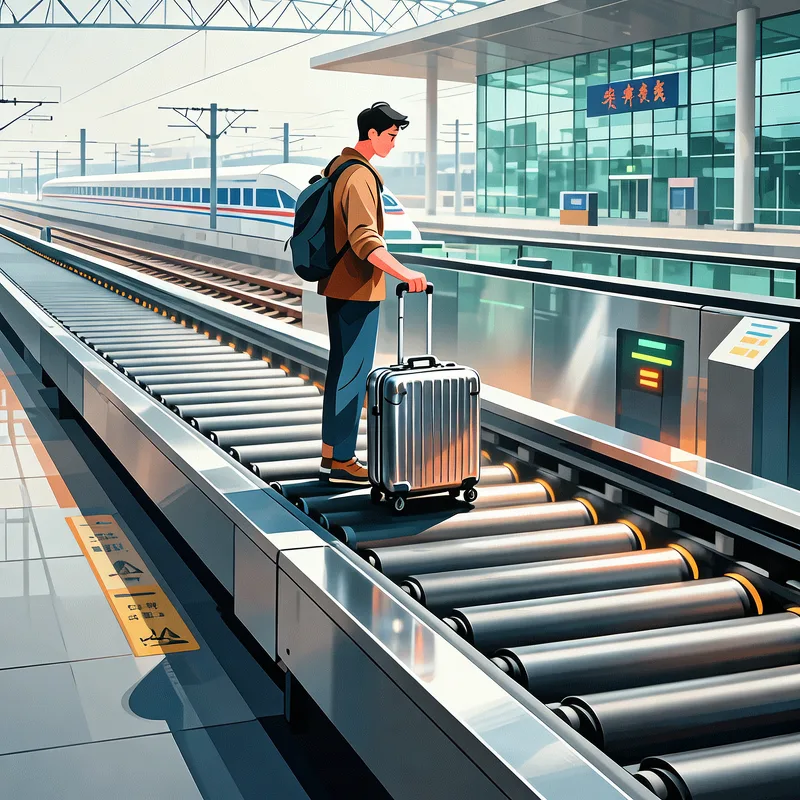
Most large stations have one public entrance for security screening before the ticket hall. Place bags, laptops, and umbrellas on the X-ray belt, then walk through a metal detector or a body scanner. Liquids are generally allowed on Chinese trains, but knives, scissors with long blades, fireworks, fuel, and most aerosols are confiscated. Power banks must be carried, not checked, and capacity limits apply; a large spare battery can cause a delay. Keep loose change, keys, and your passport in a pocket so you are not unpacking at the belt. Screening staff may ask you to open a bag or sip a bottle to prove it is harmless. Cooperation is quicker than argument, and signage is usually bilingual at Beijing’s main hubs.
Identity and Tickets
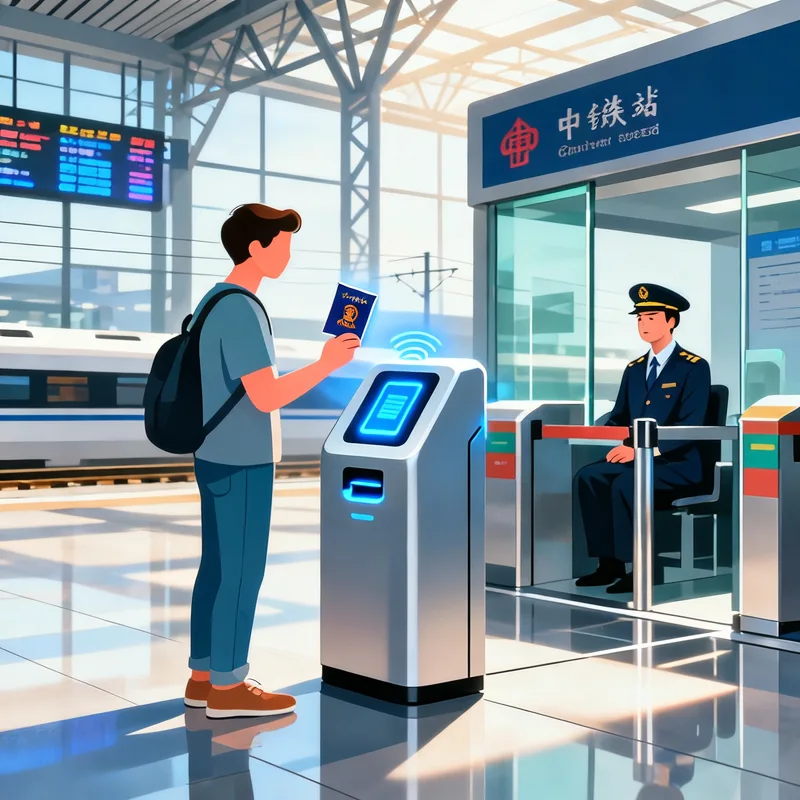
Chinese rail travel is tied to identity. When you book on 12306, the official railway app, the name on the ticket must match the document you carry; for foreign visitors that is normally a passport. At the gate, insert or scan the same passport at the reader and step through. A printed ticket is rarely needed. If your passport is in a suitcase, you will hold up the queue while staff search. Some stations use facial recognition at the gate, but a passport remains the fallback for foreign travellers. Keep a screenshot of the booking and the platform number, since station boards are easy to misread in a hurry. Staff in reflective jackets can point you to the right gate; show them the ticket details on your phone.
Timing and Queues
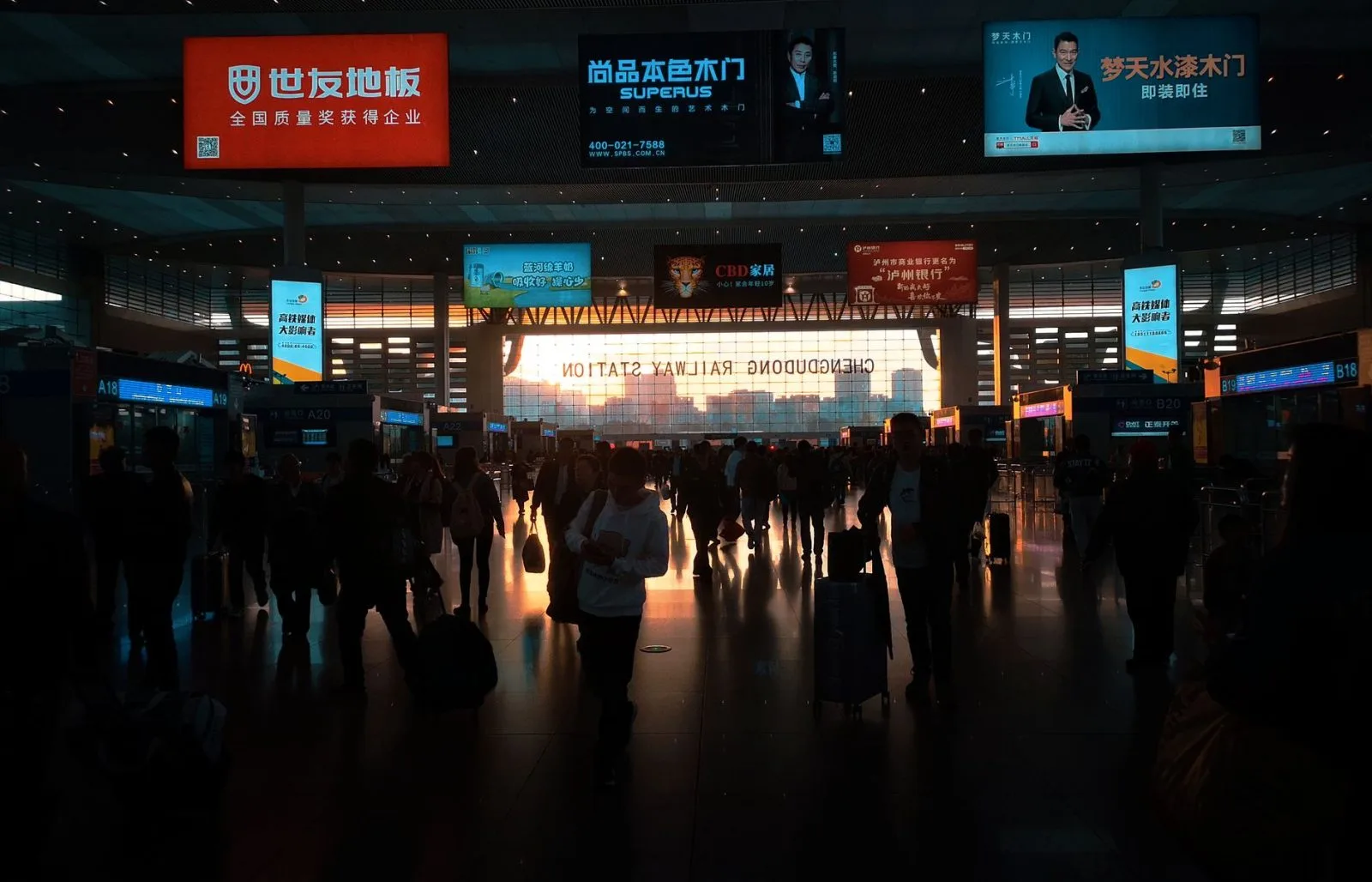
Beijing West, Beijing South, Beijing Chaoyang, and Beijing Fengtai are large buildings with long walks between screening, waiting room, and platform. During Spring Festival or the October holiday, the security line can snake through the forecourt. Allow at least an hour before departure and ninety minutes at a peak period, especially if you need to collect a paper ticket or find the correct entrance. Queues are physical rather than ticketed; follow the rope lines and watch for a second lane that opens nearby. Families and passengers needing assistance may use a priority lane. Once through, check the departure board for your train number rather than relying on memory. Boarding usually begins fifteen to twenty minutes before departure and gates close a few minutes before the train leaves.
On the Platform and After
Platforms are open, often crowded, and shared by high-speed trains arriving at speed. Stand behind the safety line until the train stops, and let passengers off before you push forward. Carriage and seat numbers are painted on the platform; match them to your booking before boarding. A conductor may check your passport again on board. Luggage space is limited above the seats, so put large cases at the end of the carriage where staff indicate. Do not photograph security equipment, screening staff, or the inside of control rooms. If an item is confiscated, ask for a receipt and collect it at the designated office. At your destination, follow signs for the metro or taxi rather than accepting a ride from someone who approaches you inside the concourse.
The queue starts at the door, not at the gate: arrive early and keep your passport in hand.
स्रोत और आगे की जानकारी
- China Railway — China Railway.
- 12306 railway ticketing — China Railway.
- Train travel in China — Travel China Guide.
इसे यथास्थान देखें
इस प्रविष्टि का अनुसरण करके उस क्षेत्र तक पहुँचें जहाँ यह संबंधित है।
मानचित्र द्वारा अन्वेषण करेंइस चर्चा का अनुसरण करें
उन अन्य प्रविष्टियों को ब्राउज़ करें जिनमें इसके समान टैग हैं।
टैग ब्राउज़ करें