यात्रा मार्गदर्शिका
हाई स्पीड रेल
A National Network at 300 km/h
China’s high-speed lines connect major cities with frequent, electrified, mostly elevated track.
- अनुभाग
- यात्रा मार्गदर्शिका
- क्षेत्र
- बीजिंग
- युग
- आधुनिक चीन
- टैग
- Geography, Transport
China’s high-speed rail network is the largest in the world, measured by route length. It grew from a single 2008 line between Beijing and Tianjin into a national system linking regional capitals, coastal cities, and tourist gateways.
From the Beijing–Tianjin Line
The Beijing–Tianjin intercity railway opened in August 2008, just before the Beijing Olympics, with trains designed for 350 kilometres per hour. It followed the Sixth Railway Speed-Up campaign, in which conventional lines were upgraded and new rolling stock imported from Siemens, Alstom, Bombardier, and Kawasaki. Technology transfer and domestic redesign produced the CRH family and later the Fuxing series. The 2011 Wenzhou accident on the Beijing–Shanghai line, caused by signalling failures during a thunderstorm, killed forty people and led to speed reductions, audits, and a slower pace of construction. The network nevertheless expanded rapidly after 2013.
How the Network Is Built
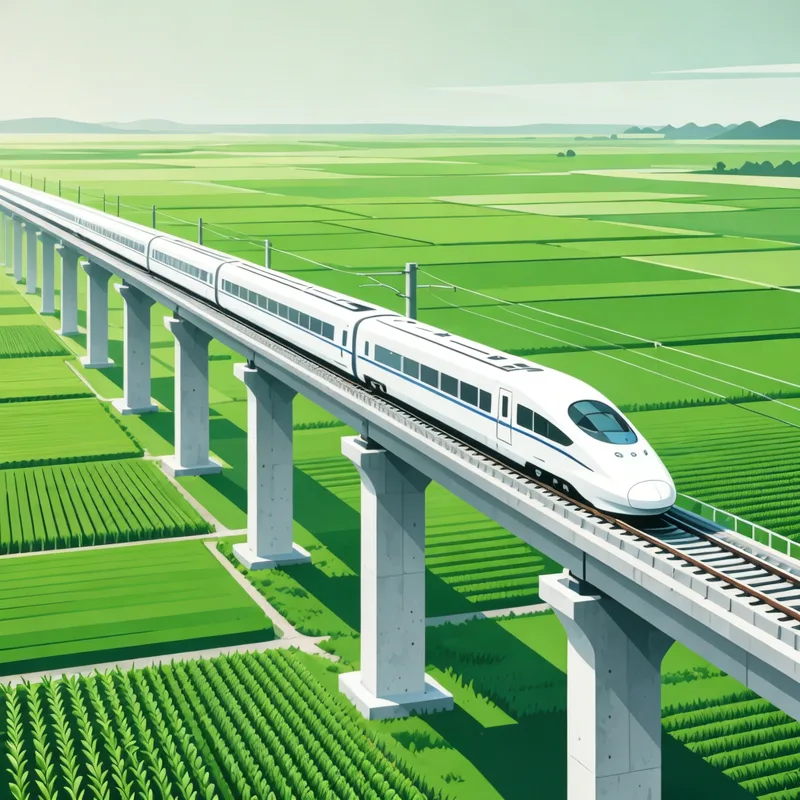
High-speed lines require gentle curves, long tunnels, and level track, so much of the network rides on concrete viaducts. Bridges keep routes straight, reduce land take, and allow farm traffic and roads to pass underneath. Continuous welded rail, slab track, and overhead catenary carry trains at operating speeds commonly around 300–350 kilometres per hour on the fastest services. Automatic train control limits speed and spacing; drivers monitor the system rather than relying only on signals beside the track. Stations are often built outside old city cores, where land was available, so a central railway station and a high-speed station may be different places in the same city.
Using the System
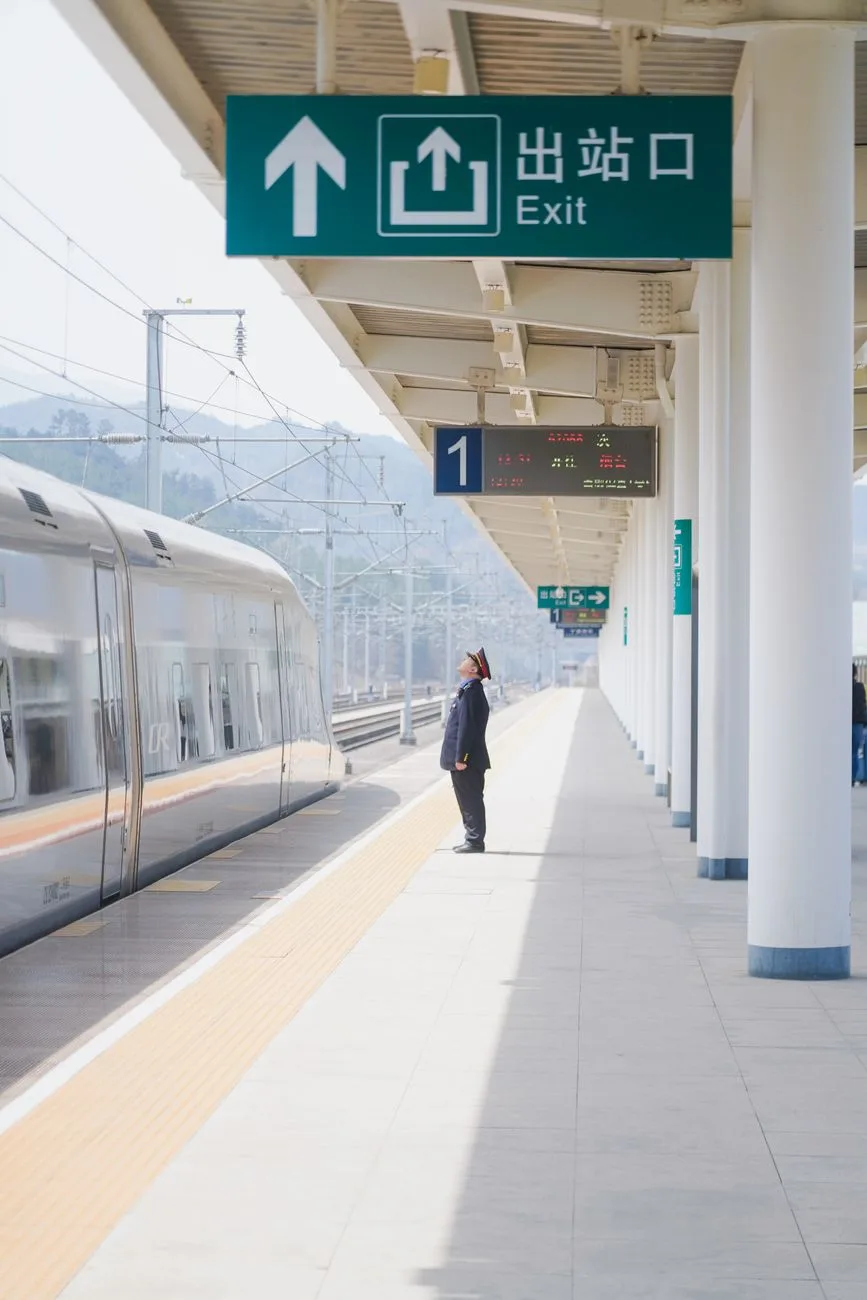
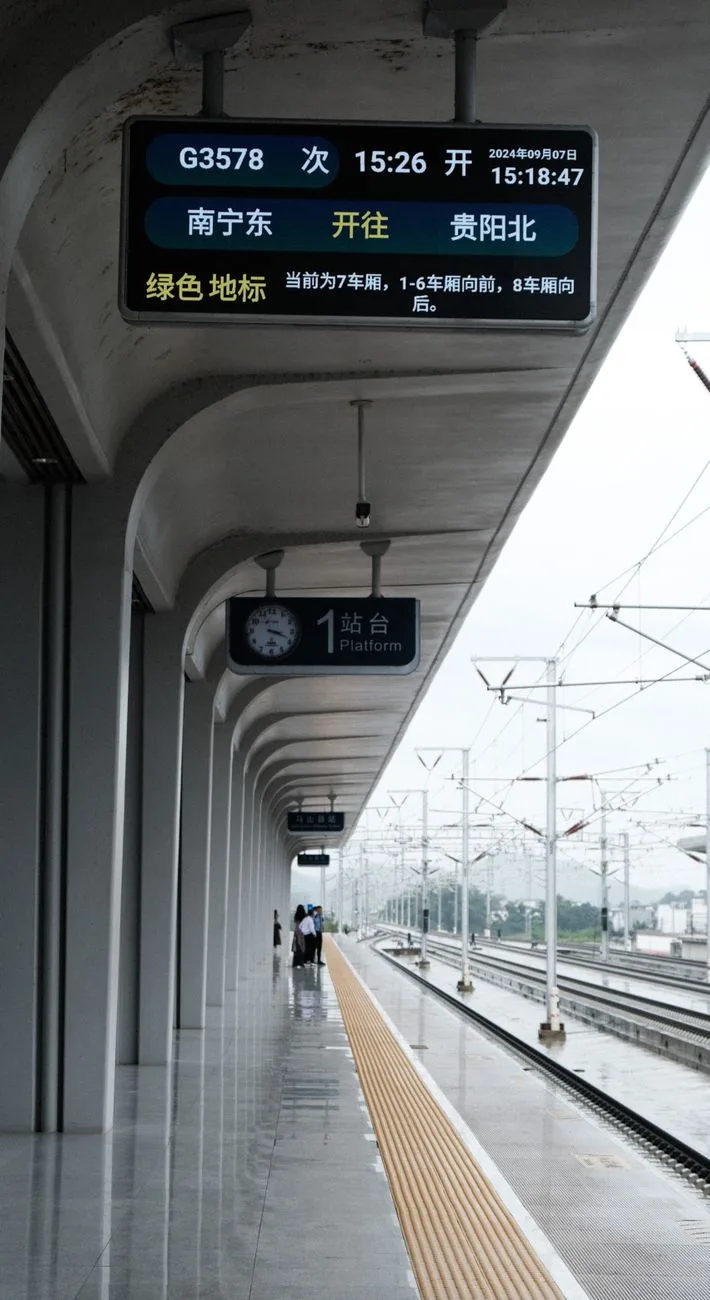
Tickets are sold through the official Railway 12306 website and app; passports or resident identity documents are checked at entry, and names must match the booking. The G-series are the fastest passenger services, D-series generally run on upgraded or slightly slower lines, and overnight high-speed sleeper trains now cover longer routes. Larger stations use airport-style security, so arriving well before departure is wise. Seats are assigned, restaurant cars or at-seat delivery are common, and station boards use Chinese characters and Roman letters. Beijing West, Beijing South, and Beijing Chaoyang serve different lines, so the station name on the ticket matters as much as the city.
- Book through Railway 12306 with an identity document
- Allow time for security screening at large stations
- Check whether the ticket says Beijing South, West, or Chaoyang
- G trains are generally faster than D trains
What the Routes Connect
The Beijing–Shanghai line, opened fully in 2011, links the political capital to the financial centre in about four and a half hours on the fastest trains. The Beijing–Guangzhou line, completed in 2012, runs south through Shijiazhuang, Zhengzhou, Wuhan, and Changsha. The Lanzhou–Xinjiang line reached Urumqi in 2016, extending high-speed service deep into the northwest. Coastal lines connect Tianjin, Jinan, Nanjing, Hangzhou, and Shanghai, while newer routes serve Chengdu, Chongqing, Kunming, and Xi’an. Trains are frequent on busy corridors, but distances remain continental: a traveller crossing several time-zone-widths of China should still allow a full day.
A high-speed station may sit far from the old city centre, so the ticket’s station name is part of the journey.
स्रोत और आगे की जानकारी
- High-speed rail in China — एनसाइक्लोपीडिया ब्रिटानिका।
- China Railway High-speed — World History Encyclopedia.
- China Railway 12306 — China Railway.
इसे यथास्थान देखें
इस प्रविष्टि का अनुसरण करके उस क्षेत्र तक पहुँचें जहाँ यह संबंधित है।
मानचित्र द्वारा अन्वेषण करेंइस चर्चा का अनुसरण करें
उन अन्य प्रविष्टियों को ब्राउज़ करें जिनमें इसके समान टैग हैं।
टैग ब्राउज़ करें