जीवन और लोककथाएँ
Hotpot
A Pot at the Centre of the Table
Hotpot turns dinner into a shared act of cooking at the table.
- अनुभाग
- जीवन और लोककथाएँ
- क्षेत्र
- सिचुआन
- युग
- युगों के पार
- टैग
- खाना
Hotpot is a meal built around a vessel of simmering broth. Diners lower thin slices of meat, vegetables and offal into the liquid, cook them to the texture they want and dip them in sauce before eating.
One Pot, Many Names
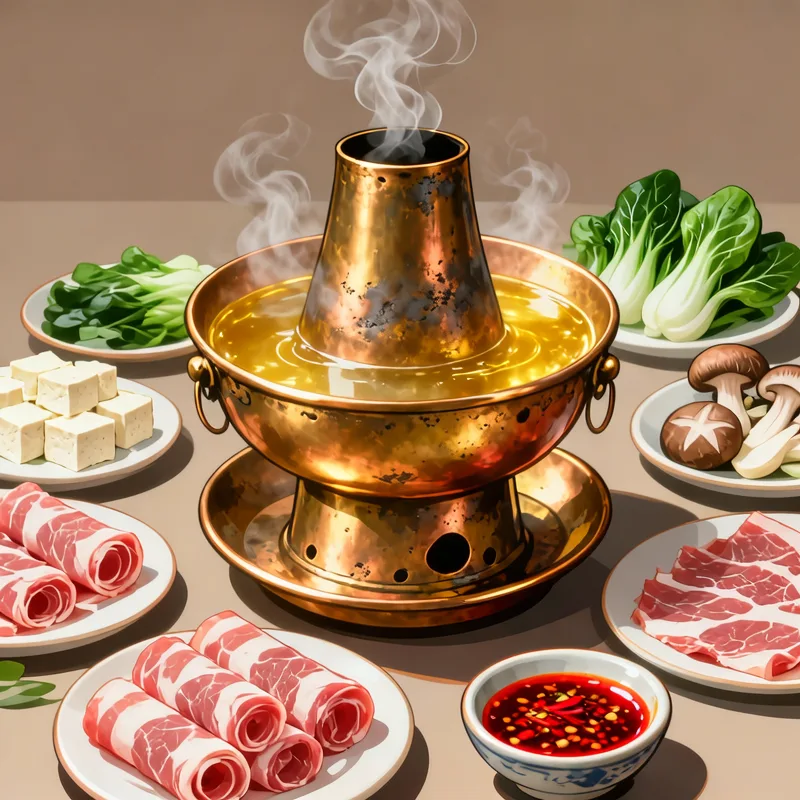
The Chinese term huoguo literally means fire pot. In northern China the classic form is the copper pot with a central chimney, heated by charcoal, in which paper-thin slices of mutton are swished briefly in a clear broth. Beijing’s Donglaishun, founded in 1903, made the mutton dip famous, served with sesame sauce, fermented tofu and chive flower sauce. In Sichuan and Chongqing the pot is filled with a red, oil-floated broth instead. The table method is the same; the flavourings mark the region.
The Sichuan Broth
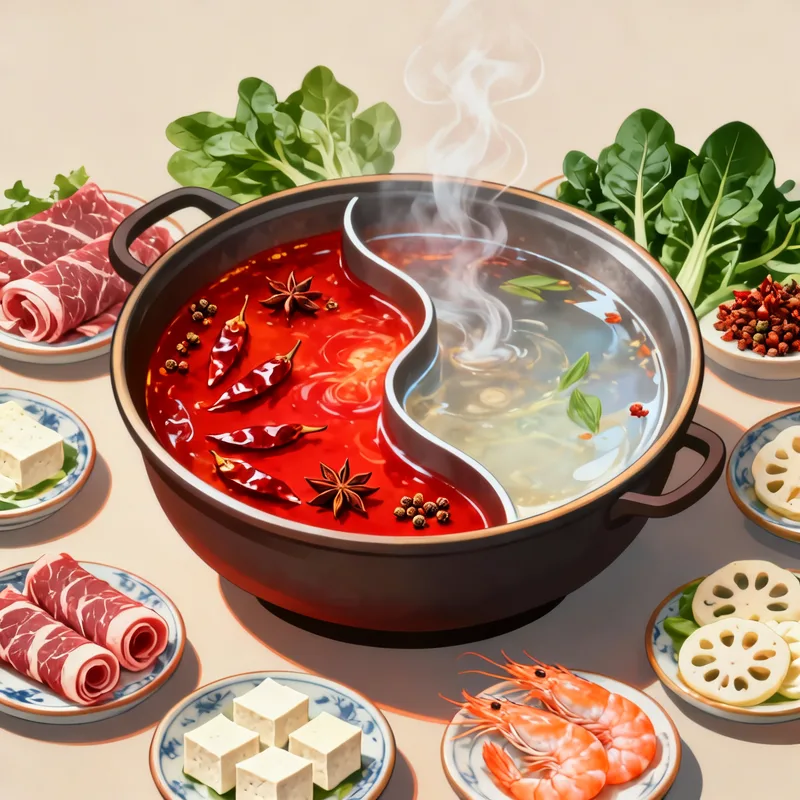
Two sensations define the Sichuan version. Chilli brings capsaicin heat; Sichuan pepper, the husk of a prickly ash, supplies hydroxy-alpha sanshool, which makes the tongue tingle and vibrate. Together they create ma la, numbing spicy. Chilli reached China only after the sixteenth century, arriving from the Americas through maritime trade, so the modern red broth is comparatively recent. Earlier seasonings relied on Sichuan pepper, ginger, fermented beans and the broad-bean chilli paste of Pixian.
A Chongqing lao huoguo, or old hotpot, traditionally starts with beef tallow, dried chillies and paste, browned until the oil turns red. The nine-grid pot divides the surface: the centre boils hardest, the corners simmer gently, and each diner keeps track of their own food. Offal — tripe, duck blood, intestine — was the original cheap fare of dockworkers and boatmen at Chaotianmen. Tripe is cooked by the rule of seven up, eight down, dipped and lifted repeatedly for a few seconds.
Chengdu and the Split Pot
Chengdu style is usually gentler than its Chongqing cousin. Cooks often use vegetable oil rather than beef tallow, add more aromatics and offer a yuanyang pot, a divided vessel with red broth on one side and a clear, mild stock on the other. Diners gather around it in stages: tough items go in first, greens and sliced fish last. Sesame oil mixed with garlic, coriander and scallions cools each bite before it reaches the mouth. The divided pot is a useful invention for a table with mixed tolerances.
How to Eat It
Hotpot has a practical etiquette. Raw and cooked foods need separate chopsticks or serving utensils, and a shared pot requires patience with other diners’ timing. A few rules are widely repeated: do not stir the whole broth, do not fish with your own chopsticks, and let the boil return after adding cold ingredients. The meal is slow by design. As the pot reduces, the broth grows stronger, and the last handful of noodles absorbs everything that has gone before.
- Nine-grid pot: centre boils; corners simmer
- Mutton dip: sesame sauce, fermented tofu, chive flower sauce
- Tripe: seven up, eight down
- Yuanyang pot: one red side, one clear side
From Street Stall to Global Chain
The modern restaurant trade carried hotpot far beyond Sichuan. Haidilao, founded in Jiangyou in 1994, turned the meal into a service spectacle with waiting-area snacks and attentive staff; its branches now appear in many countries. Other chains adapted the format to clear broths and individual pots. Yet the social logic has not changed. A pot keeps everyone at the table for an hour, cooking in stages and talking between courses, which is why hotpot spreads easily wherever Chinese communities gather.
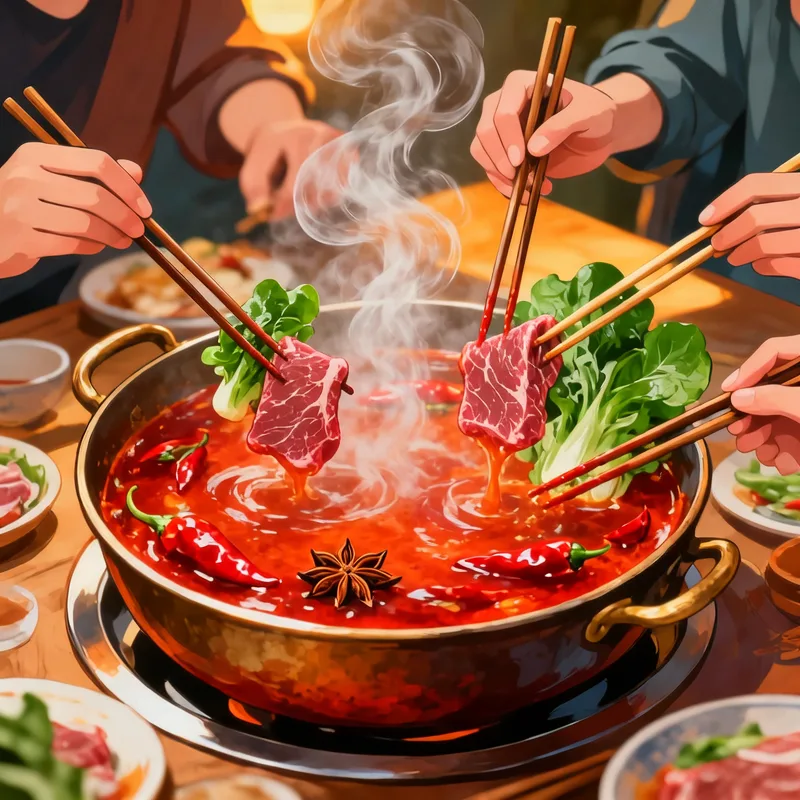
In a hotpot restaurant the meal is not served; it happens, slowly, in the middle of the table.
स्रोत और आगे की जानकारी
- Chongqing: Administration and society — एनसाइक्लोपीडिया ब्रिटानिका।
- Chinese cuisine — एनसाइक्लोपीडिया ब्रिटानिका।
- What flavors distinguish Sichuan cuisine from other Chinese cuisines? — एनसाइक्लोपीडिया ब्रिटानिका।
इसे यथास्थान देखें
इस प्रविष्टि का अनुसरण करके उस क्षेत्र तक पहुँचें जहाँ यह संबंधित है।
मानचित्र द्वारा अन्वेषण करेंइस चर्चा का अनुसरण करें
उन अन्य प्रविष्टियों को ब्राउज़ करें जिनमें इसके समान टैग हैं।
टैग ब्राउज़ करें