كرونيكل
جيش التيراكوتا
An Emperor’s Buried Legions
Thousands of clay soldiers were buried near Qin Shi Huang’s mausoleum to guard the emperor after death.
- قسم
- كرونيكل
- منطقة
- شانشي
- عصر
- تشين هان
- الوسوم
- Geography, History, Scenic Sites
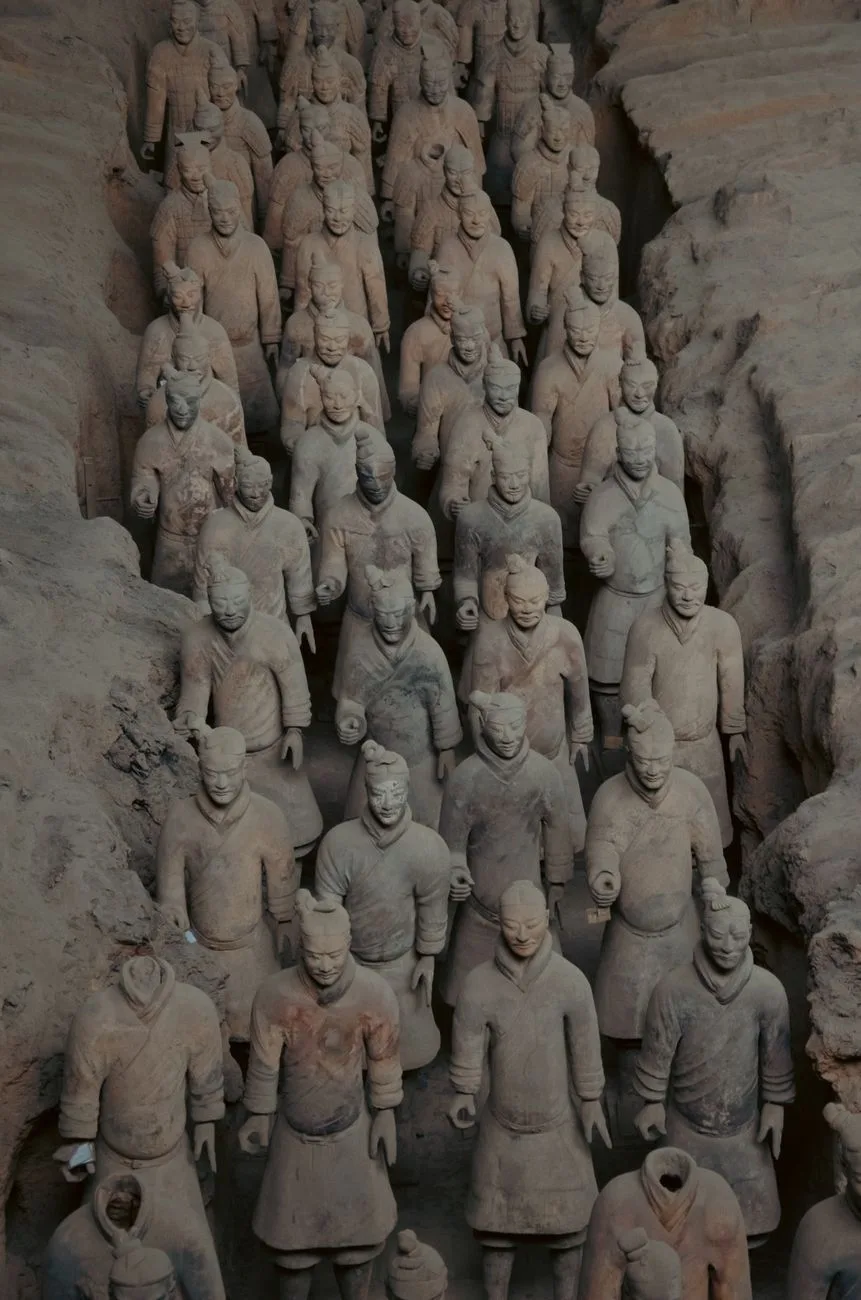
The Terracotta Army was made for the tomb of Qin Shi Huang, the first emperor of China, who died in 210 BCE. The figures were part of a larger necropolis near Xi’an, not an isolated pit of statues.
The Tomb of the First Emperor
Qin Shi Huang unified China in 221 BCE and began constructing his mausoleum near Mount Li soon after. The historian Sima Qian, writing about a century later, described a tomb filled with models of palaces, officials, and treasures, with mercury rivers and a roof painted as the heavens. Modern surveys have found a vast walled complex, a central burial mound, and more than six hundred associated pits. The main tomb chamber has not been excavated, partly because of technical and conservation concerns; readings of mercury vapour in the mound have been reported but debated. The army occupied side pits, where thousands of clay figures stood in formation to protect the emperor in the afterlife.
Discovery and Excavation
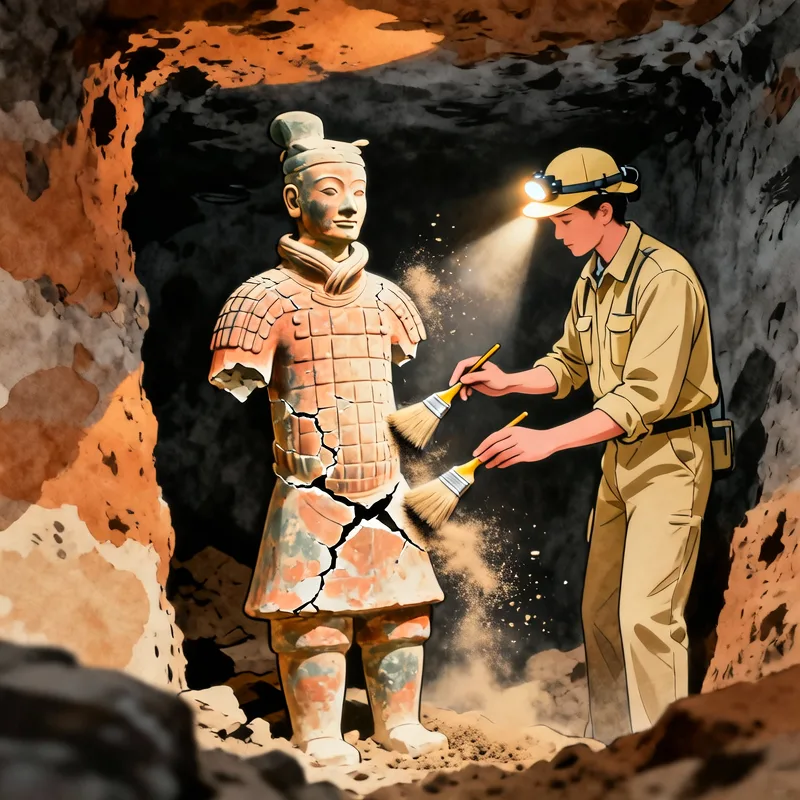
Local farmers found fragments of clay figures in 1974 while digging a well near the village of Yangzhai. Archaeologists shortly uncovered Pit 1, a huge trench holding infantry and chariots, followed by Pits 2 and 3 with mixed troops, cavalry, and a command post. More than eight thousand figures have been counted, along with hundreds of horses and more than a hundred wooden chariots whose timber has decayed. The figures were once brightly painted with mineral pigments on a lacquer ground; exposure to air caused much of the paint to flake, and conservators now control humidity and treat surfaces quickly. Excavation continues in selected areas rather than across the entire necropolis.
Mass Production and Individuality
The warriors were made in workshops using moulded parts, coils of clay, and hand-finished details. Heads, bodies, arms, and legs were produced in a limited number of types, then assembled and altered so that faces, hair, moustaches, and armour differ. Sculptors pressed or carved expressions into the clay before firing in kilns near the site. Height varies with rank: generals are taller than ordinary infantry, and some figures bear armour while others wear lighter dress. Tools found at the site carry names, suggesting organised teams of potters and artisans under state control. The result is neither wholesale repetition nor pure portraiture, but a system that could produce scale with controlled variation.
- Infantry, archers, cavalry, chariots, and officers
- Moulded components finished by hand
- Original mineral pigments on lacquer-ground paint
- Workshop names recorded on excavated tools
Visiting the Site
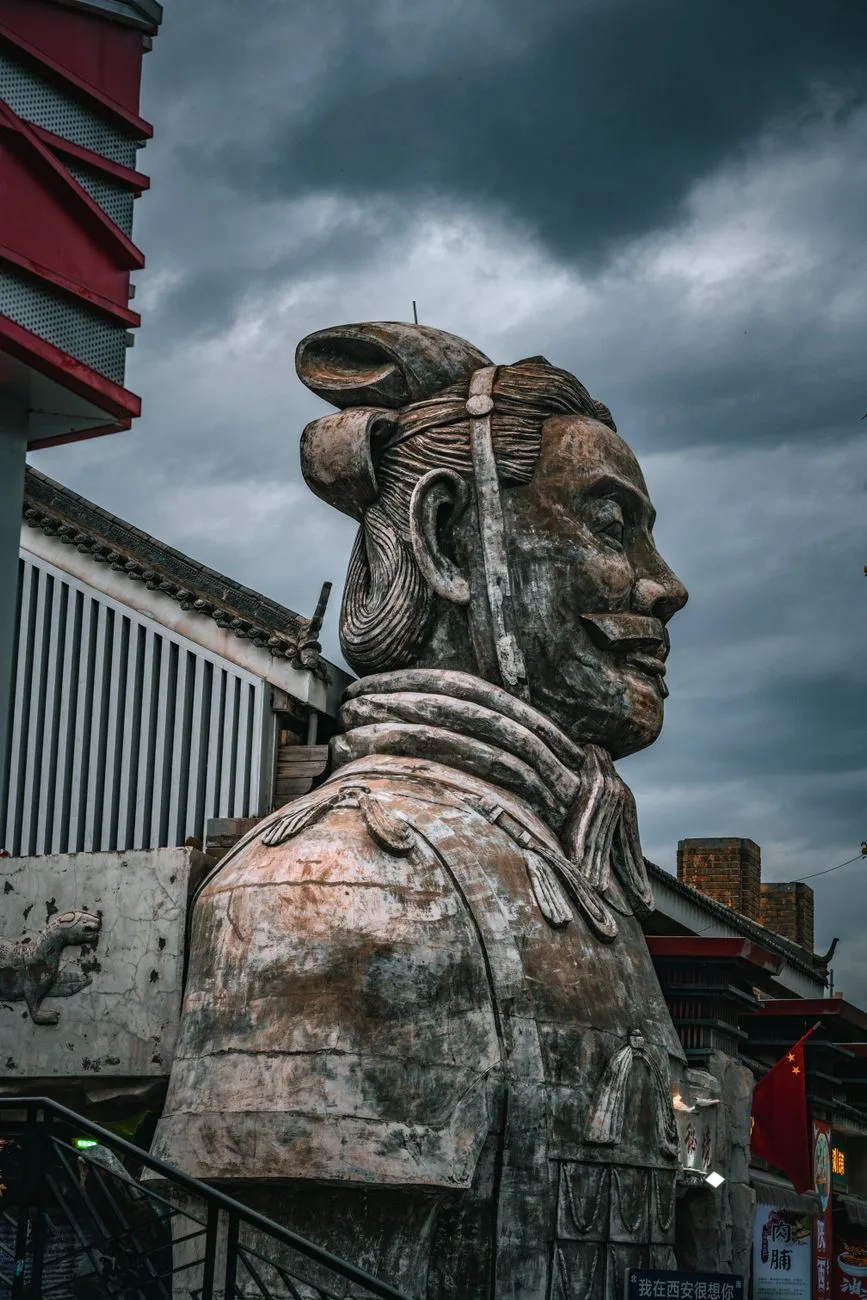
The museum lies about forty kilometres east of central Xi’an near Lintong. Three main pits are open to visitors, with viewing platforms along the excavated trenches; a separate display shows bronze chariots and horses recovered near the tomb. A circuit of the pits and museum halls takes roughly two to three hours, and an official guide or audio commentary helps explain the different ranks and formations. The site is busiest in the middle of the day, so arriving early is useful. Xi’an can be reached by high-speed rail from Beijing or Shanghai, and local buses, taxis, and tours connect the city to Lintong. Photography is allowed in many areas, but flash and tripods may be restricted.
The army was made by workshops, but its faces were finished by hands that refused exact repetition.
المصادر والمزيد من القراءة
- جيش التيراكوتا — UNESCO World Heritage Centre.
- جيش التيراكوتا — موسوعة بريتانيكا.
- The First Emperor’s Terracotta Army — The British Museum.